A conversation we have with a lot of customers is about how the size of their bike can impact the handling and performance. This is an issue that mainly comes up with bikes for riders under 5’6″. The problems always stem from trying to fit 700c wheels into a small frame. Compromises have to be made and these compromises are felt by the rider.
The first problem is toe overlap. As the frame gets smaller the front wheel gets closer to the crankset and the rider’s feet. This can result in the toe hitting the wheel in a turn, aka toe overlap. To compensate for this, many manufacturers resort to a slacker head tube angle. This puts the wheel further in front of the bike and causes sluggish handling. If the bike is small enough, you can end up with both problems anyway.
The seat tube is similarly affected. It’s often steeper to reduce the overall rider reach. This puts the rider pretty far forward over the bottom bracket and can cause fit issues resulting in stress to the knee. None of this is good for the rider. Fortunately, there’s an obvious solution: smaller wheels.
While this seems like a no-brainer, it’s historically been a difficult sell to many customers. They have a lot of reasons, but they usually boil down to either “700c wheels are faster” or “My riding buddies will literally make fun of me if I show up with smaller wheels”. While we can dispel the myth of the first one, the second one can be harder to overcome.
The myth of 700c wheels being faster is an old one. There are a lot of factors that go into making a bike fast, and wheel size isn’t really one of them. Bikes that hold the world speed records do it on smaller wheels than any race bike comes with, and this is due to strength issues, not speed considerations. We have an in depth article about wheel size here, and you can read an outside opinion here that tackles this exact myth and explains effectively why it’s rubbish. Thankfully, the rise in popularity of the 650b/27.5″ wheel has made it much easier to sell customers on smaller wheels.
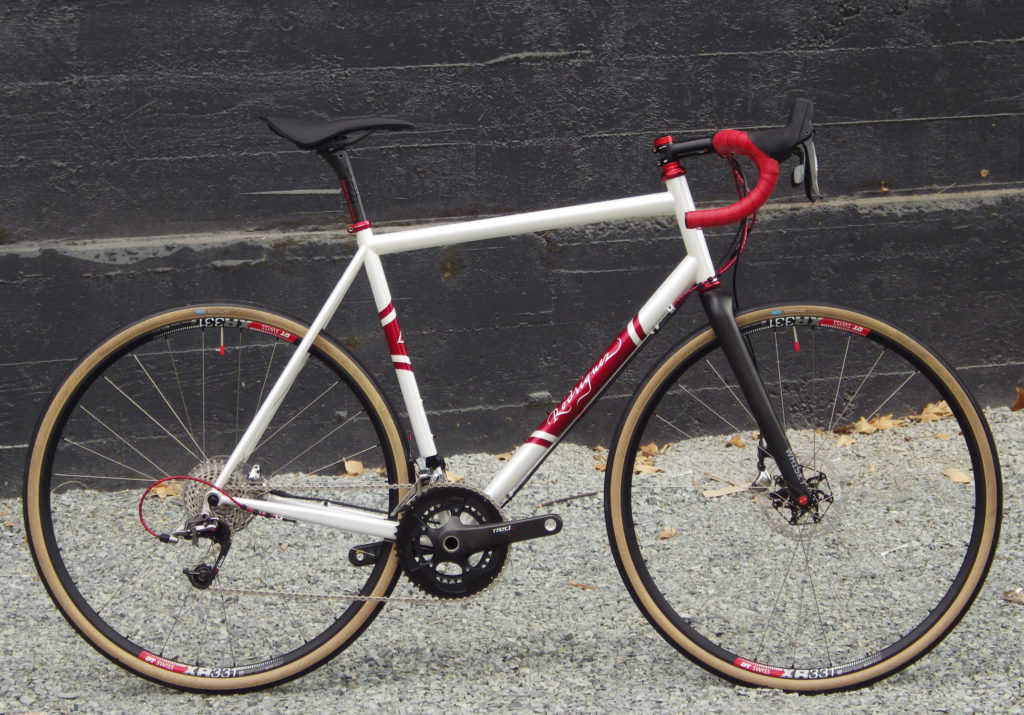
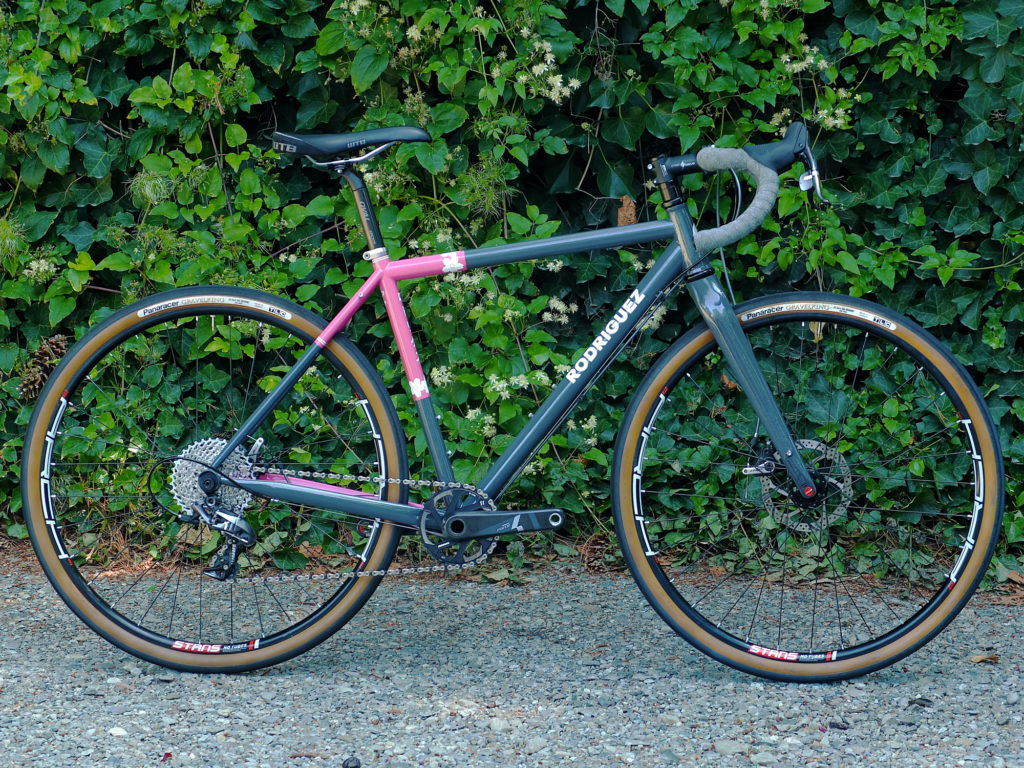
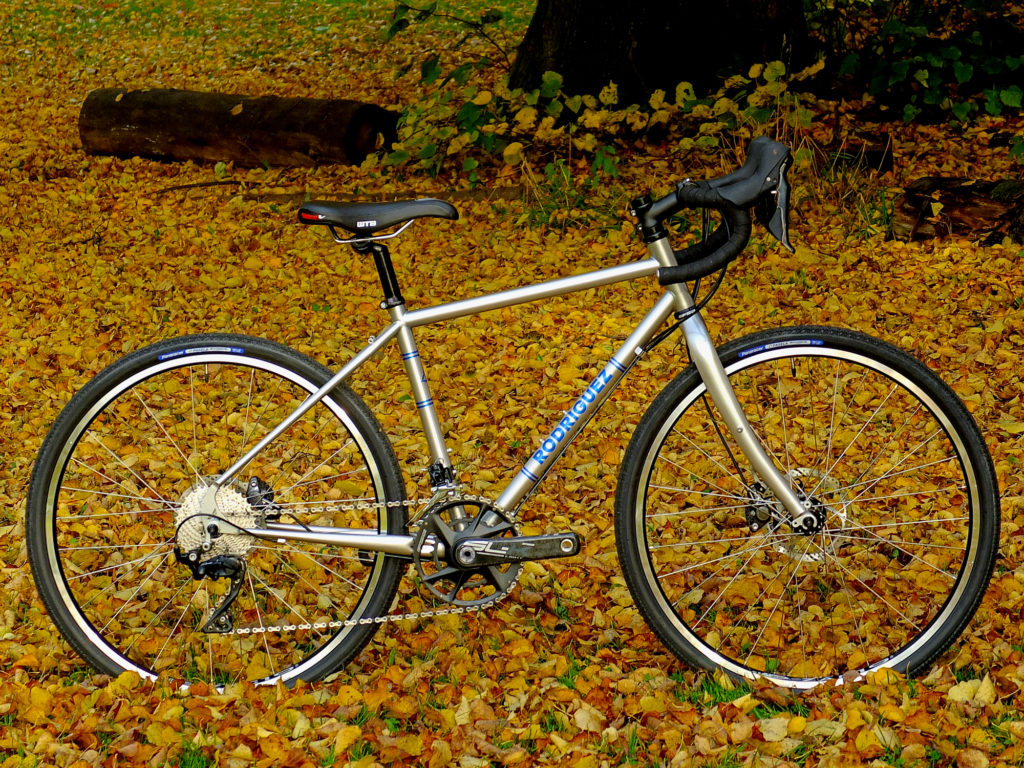
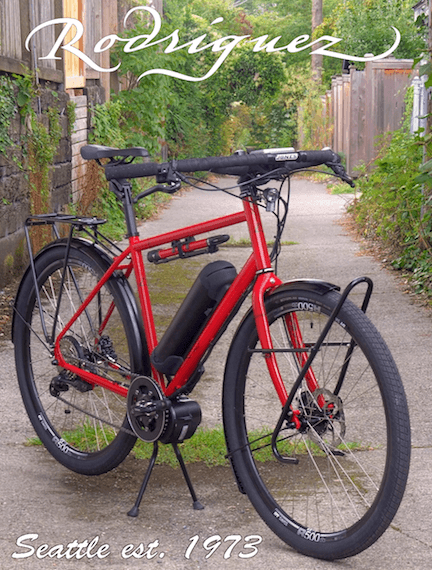
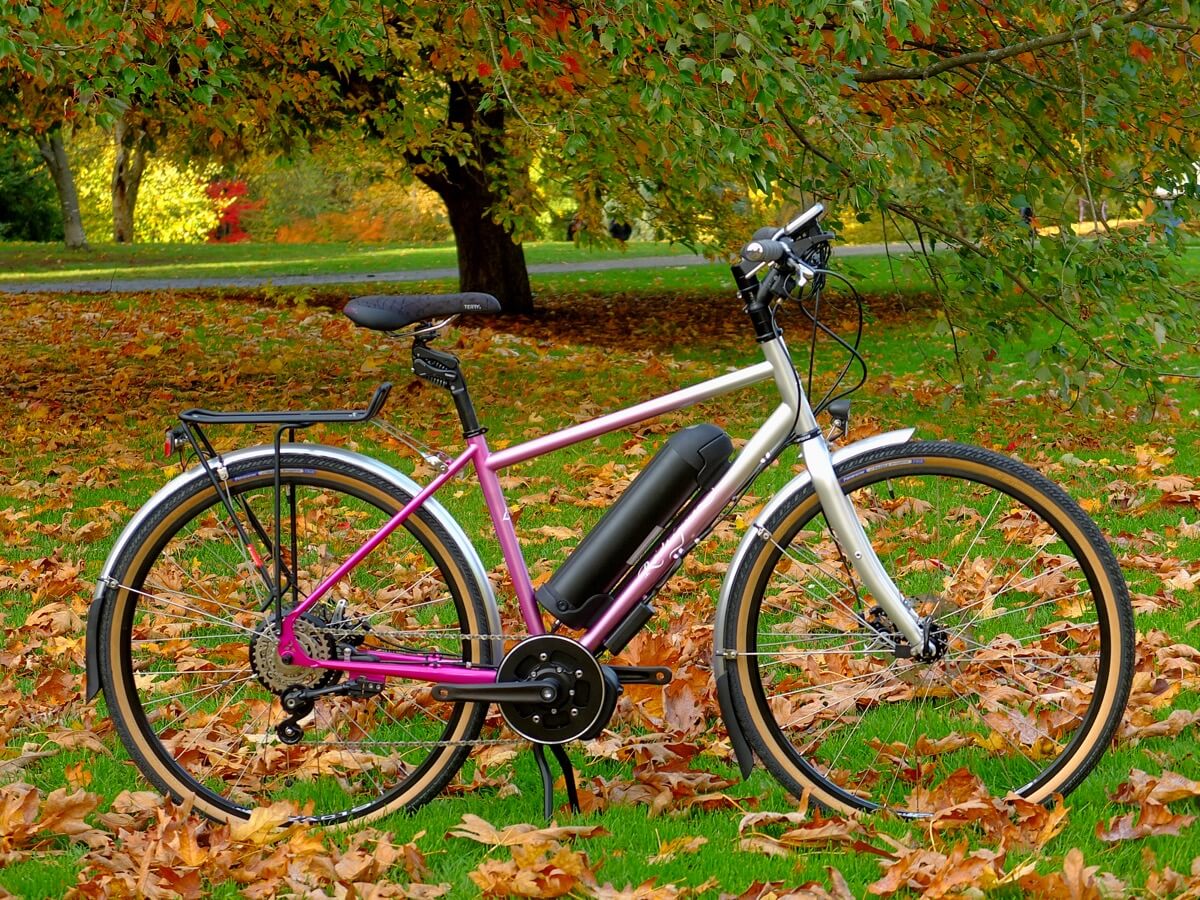
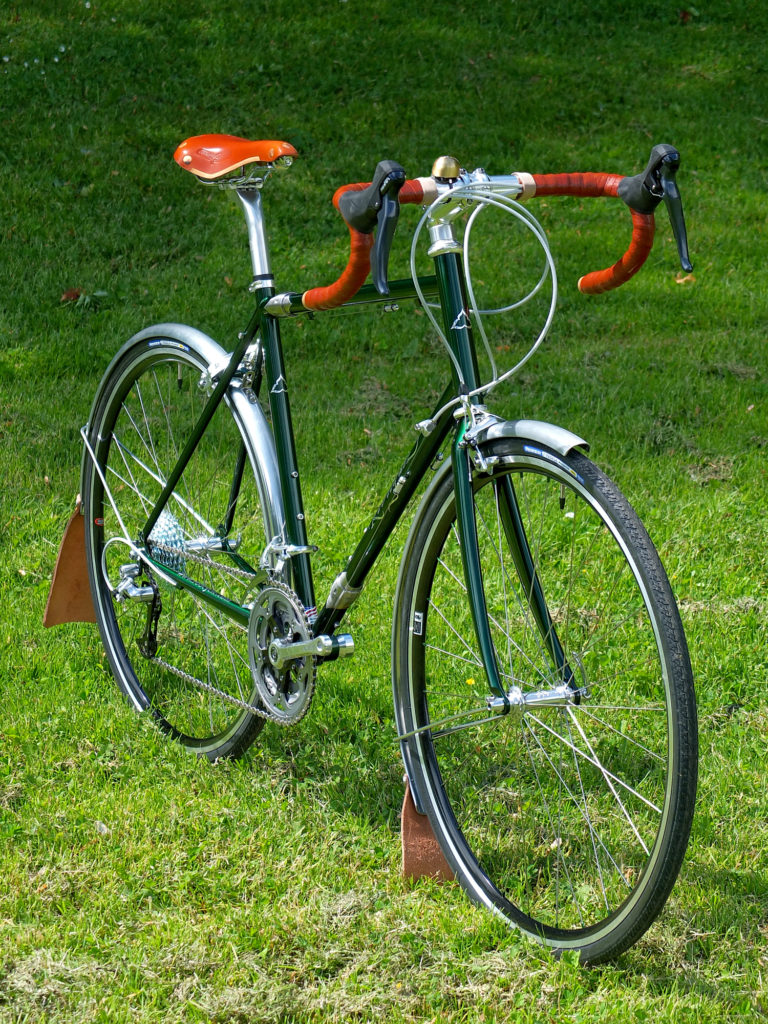
Take a look at the three photos in this post. While these bikes have very similar angles and proportions, they are for three people of very different heights. This because all three use a different wheel size. The top bike is a 700c Bandito, the middle bike is a 650b Bandito, and the bottom bike is a 26″ Phinney Ridge. The great thing is that all of these bikes have a trail of about 60mm, which means they all steer and handle the same. Now people can get a bike that handles properly no matter how tall they are. All this with no toe overlap issues and room for larger tires as well. (If you’re curious about larger tires, click here and here)
So now you know there’s no reason to own a bike that doesn’t handle well just because of your size. There’s more choice in wheel and tire size than ever before so you don’t have to compromise anything to get a bike that works just the way you want it to. As for friends who think they know better, there’s nothing wrong with educating them about their misconceptions. The proof will be in the riding.
Most bike shops slow down in the winter, but we’re as busy as ever with new bikes, new projects, and celebrating with our customers. Here’s a rundown of what we have in the works for 2020:
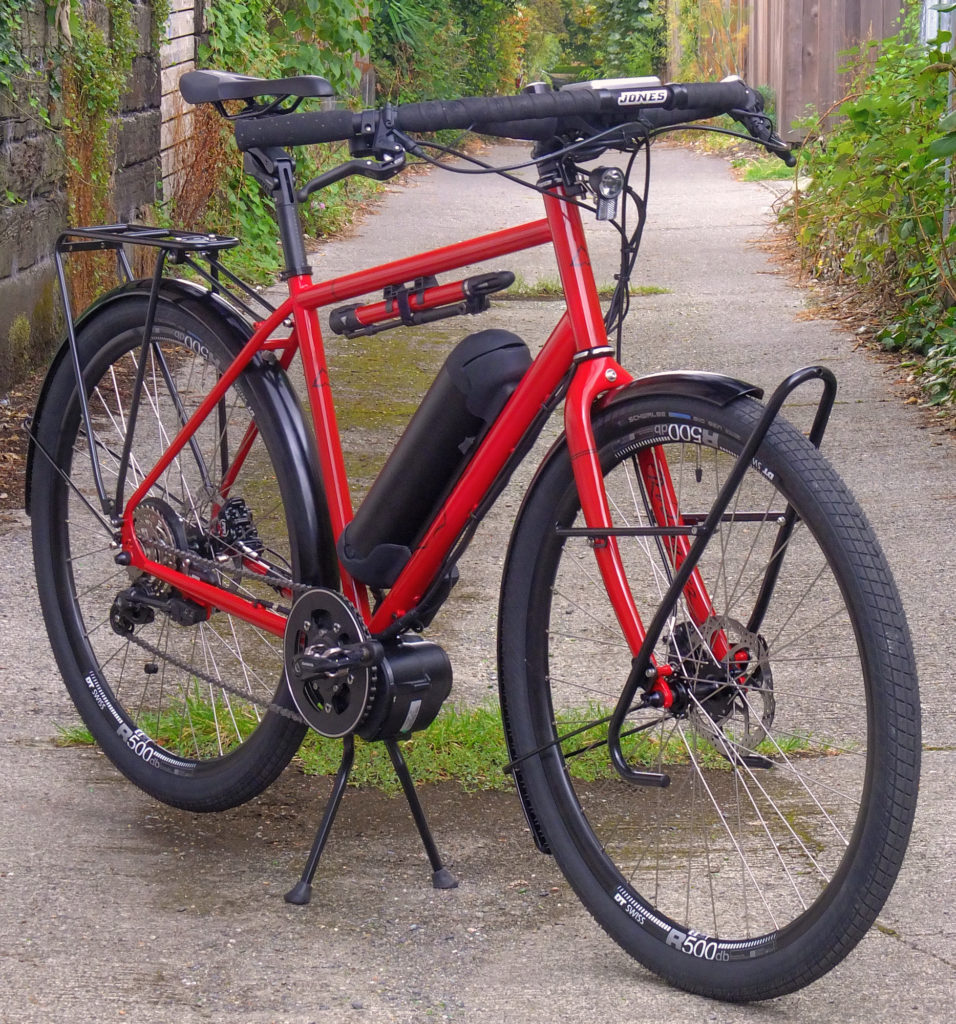
The Rodriguez Disruptor E-bike and Shift-E system
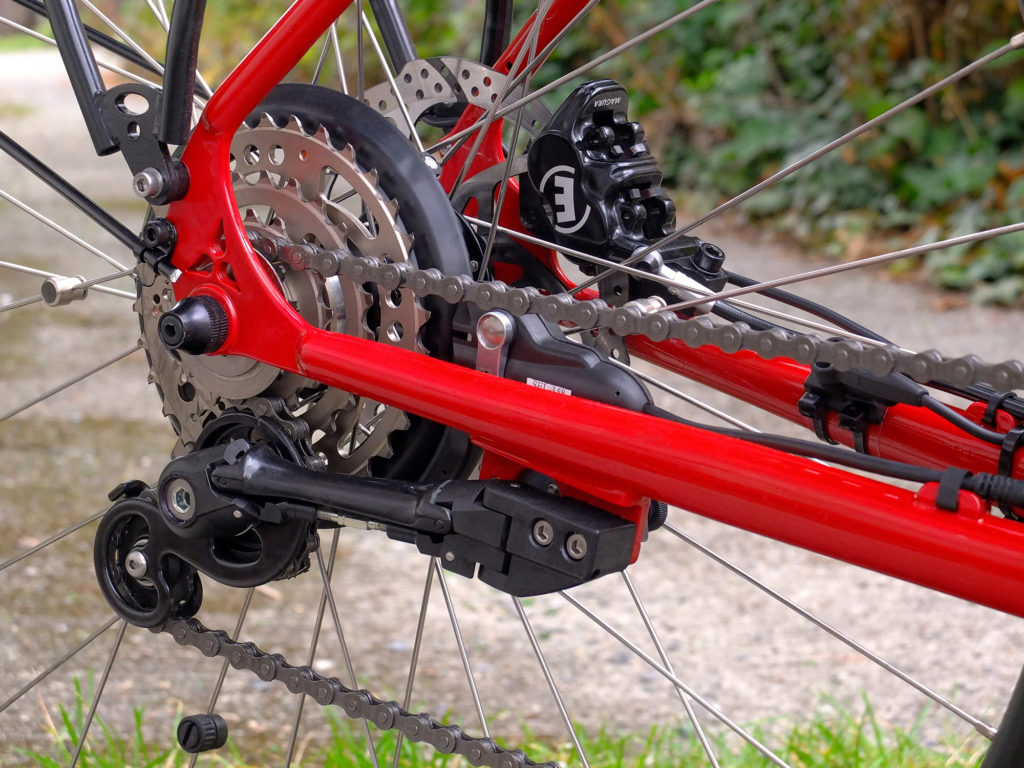
Our biggest news in the new year is the debut of the Rodriguez Disruptor e-bike with our own Shift-E shifting system. The Disruptor is an e-bike made the Rodriguez way. It’s custom built just for you with a powerful motor and a drivetrain perfect for the high torque e-bike motors produce. The Shift-E drivetrain, exclusive to R+E, can shift under as much as 2 1/2 horsepower. That’s exactly what you need with a 750 watt electric motor in charge. Shift-E also has two shifting modes: manual and automatic. You can control each shift via push button or just put it in automatic and forget it! Shift-E adapts to your preferred cadence for smooth pedaling no matter the terrain.
The Disruptor is how we think e-bikes should be. Light enough to ride like a regular bike, powerful enough for any terrain, and equipped with a shifting system that’s made to withstand the forces of an electric motor. We’re thrilled to see this bike debut to the public and we can’t wait to put you on one.
Rodriguez Thru-Axle Dropouts
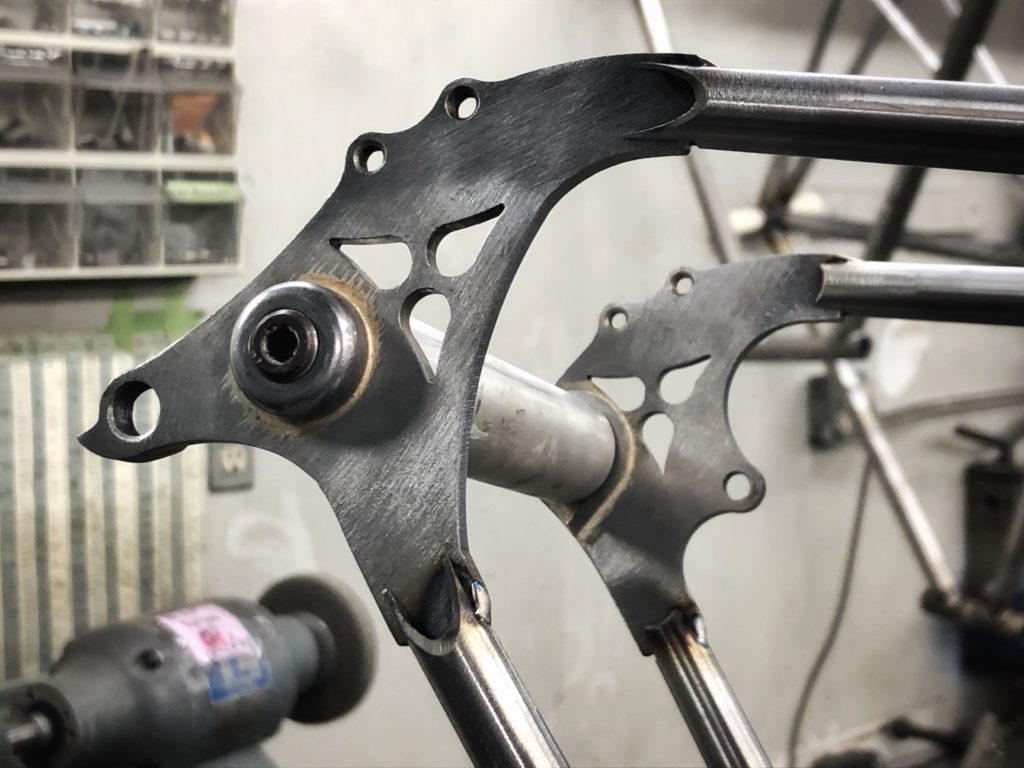
Thru-axle hubs are one of the biggest changes in bikes this decade. The quick release skewer has been dominant for nearly a century but that supremacy is finally changing. One of the most common questions we get these days is: “Can you do thru-axle?” The answer has always been yes, but we’ve been unsatisfied with the dropouts available from other companies. That prompted us to do what we usually do in that situation: we made our own! These new dropouts fit our building process a lot better than other dropouts and allow us to build a better bike for our customers. You’ll be able to see these on our showroom floor very soon.
Rodriguez Custom Frame Bags
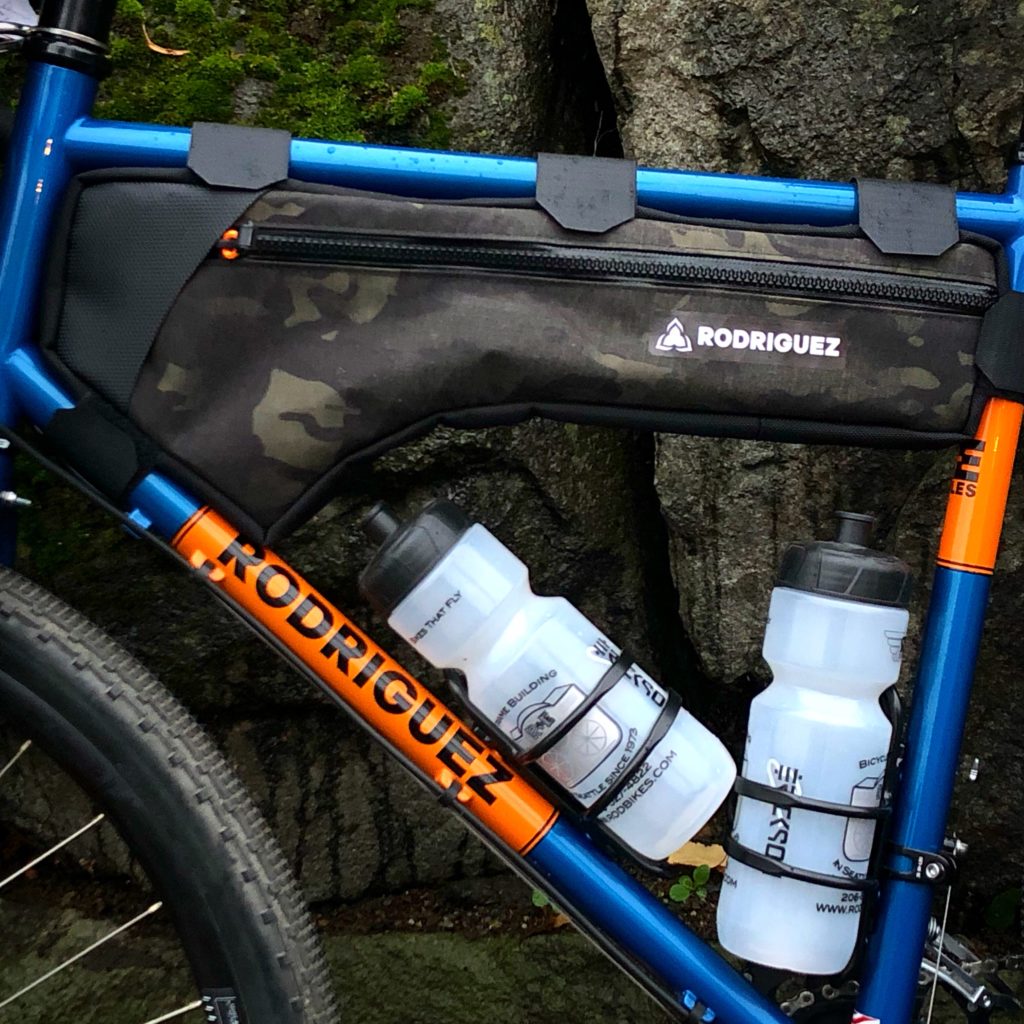
Rodriguez Bikes has partnered with Bedrock Bags of Colorado to produce our own custom frame bags. These waterproof bags are handmade in Colorado specifically for your Rodriguez bike. Since we have your frame measurements, ordering a custom bag is a piece of cake. Whether you’re doing multi-day bikepacking trips, or just commuting in the Seattle weather, these bags are up for the challenge. We’re glad to be offering such a rugged option for our customers in the new year.
Bike and Pike 2020
This year is our 12th annual Bike and Pike open house! Mark your calendars, it’s happening on Saturday February 29th. We’ll have lots of fun stuff on hand, like Disruptor test rides, Pike Brewing beer, corn dogs (probably!), frame shop tours, and tons of good conversation with people that love bikes. It’s a great party every year and this one promises lots of fun new stuff to see and try out. We can’t wait to see you there!
I can assure you this is not a complete list of the interesting things happening at R+E in 2020, but I can say we’re off to a great start. Keep an eye out here and on our social media to see what we may be plotting in the new year.
Printed in festive red and green letters the slogan glimmered on the poster stapled to the telephone pole under the street corner light. Santa had to adjust his glasses just to make sure he was reading the poster correctly.
“Well Ho-Ho-Ho, what do you know. I do believe this is related to the “Dear Santa” letter that I received before Christmas from my most inventive elf Wunorse. That crazy old elf, he could have just texted me. I mean we just got 5G at the North Pole for goodness sake.”
Santa looks over his shoulder and sees Blitzen texting a message on his new phone. That was Mrs. Clauses’ idea, get the reindeers new cell phones for presents this year.
“Why does a reindeer need a cell phone anyway? Heck we should have gotten them something more practical like bicycles.” Santa blurts out loud to nobody in particular.
“You know, there is a lot of attention on these E-bikes right now and it wasn’t just Wunorse that put the ‘Disruptor’ bike on their wish list. I had so many requests this year for this new E-Bike called the Disruptor. Hmmm, maybe there is something to these E-Bikes with the powerful motor, automatic electronic shifting and custom frames built to the riders specifications.”
Santa ponders a thought as he looks down candy cane lane, a light snow falls from the North Pole sky and it appears Blitzen has discovered something called geocaching.
“For the love of all the mistletoe on this earth, I should treat myself to one of these Disruptor bikes. An E-Bike that shifts automatically, sports a 750W capable motor, can shift under torque and the bicycle is hand built in the USA to my specifications… what am I waiting for”
“Blitzen, put down that phone and get your lazy reindeer antlers over here, we are heading to Seattle!”
“Ahhhh, Santa – Can this wait until I finish the whack-an-elf game I just downloaded?” Blitzen said emphatically.
“NO!” Santa quickly retorted.
Santa and Blitzen plot their course and soon they are heading south to R+E Bicycles located in the University District of Seattle WA.
“Ho-Ho-Ho Let’s goooooooo.”
The journey was quick and they arrived at the shop with a clatter, Dan the company’s owner came out to see what was the matter. A man and a reindeer is what he did see, how cool is that he thought, Santa is here at R+E.
I don’t want to be too much of a Copper Stopper Bugger Hugger this year, however I want a bright new shiny bicycle under the tree. Not just any ordinary old bike, Santa. I want one that has a powerful electric assist motor as well as automatic electronic shifting. And to top it all off, I want it to be custom built to my specifications.
I know what you are thinking, Santa. “Ho-Ho-Ho! Why, that doesn’t even exist. How can my elves make something that hasn’t even been invented yet?”
Santa, it does exist and it’s available right now!
Your elves are not privy to this technology yet so let me tell you where this bicycle decked out with all these goodies can be found. The bicycle is called the Disruptor and can be found at R+E Cycles in the University District of Seattle Washington.
Santa, let me explain a little more about the Disruptor:
A powerful motor capable of 750W
Automatic (yes automatic) or Manual electronic shifting that is uniquely engineered to withstand the torque that the powerful motor can dish out
A bunch of high-end components are already included
A reasonable weight (heck, even I can lift it up on my roof rack)
Any paint job you desire. There are standard colors available but if you want to go the custom route you can do that as well – If you desire a paint job that looks like a peppermint candy cane, R+E can do that!
And the bike frame is hand built in the U.S.A to my specifications
With all the letters I imagine you will be receiving about the Disruptor I should also tell you the Disruptor comes in two basic styles, Step-Through or Sloping Top Tube, and that when you purchase a bicycle from R+E Cycles you are not only buying a bike, you are buying a whole bike company.
You might say this bike is a Christmas wish come true!
Put away the Thanksgiving decorations and throw away that leftover turkey hanging out in the back of your refrigerator, it’s time to dig out the bin of holiday movies and get your tree up. Ahhhh, the holidays. What a wonderfully magical and stressful time of year. Wouldn’t it be nice if decorating the house was automatic? Just sit back on the couch, press the “decorate the house for the holidays” button on the remote, and “ho-ho-ho” the tree is lit and all those festive knick-knacks you have collected over the years are in their place.
Now that you have all this free time, you can go for a holiday ride. Wouldn’t it be nice if your bicycle were automatic as well? Well hold on to your eggnog because I’ve got some holiday cheer for you! Rodriguez Bicycles’ Disruptor™ electric-assist bike, equipped with the Shift-E™ automatic electronic shifting system, is ready to take flight. How about that? An eBike from a company with 47 years experience in bicycles!
Unlike the frustrating process of finding the “decorate the house” remote lost in the couch cushions, operating the Shift-E™ system is simple. Shift-E has two modes you can place it in, manual or automatic. Set in automatic mode, you can pedal and relax as the Shift-E electronic shifting recognizes the speed at which you are traveling and shifts for you automatically. If you happen to find yourself riding home with a bag full of toys strapped to your rack you can keep your mind on thoughts of the holidays without a care about shifting.
Protect your investment: Not only does Shift-E™ have the ability to automatically shift for you, it is engineered to withstand the punishing torque that E-Bike motors dish out. It will also choose the right gear to protect your E-bike motor. No more over-torquing. Shift-E™ allows you to fly up the neighborhood hills without any pedaling interruptions, awkward shifts, or worrying if you’re in the right gear.
Don’t forget the holiday cookies! To sweeten up the deal the Rodriguez Disruptor™ has plenty of power for any hill or any ride. With up to 750W of power, you could strap a sleigh on the back of your Rodriguez Distruptor™ to deliver cookies and good cheer to an entire neighborhood.
Combining the Shift-E™ shifting system with a powerful E-Bike motor, the Rodriguez Disruptor™ can handle whatever holiday havoc you can throw it’s way. It’s like having eight reindeer in front of you effortlessly leading the way back to the North Pole after a full day of delivering toys.
Stop by the shop, grab a holiday cookie and take a Disruptor for a spin.
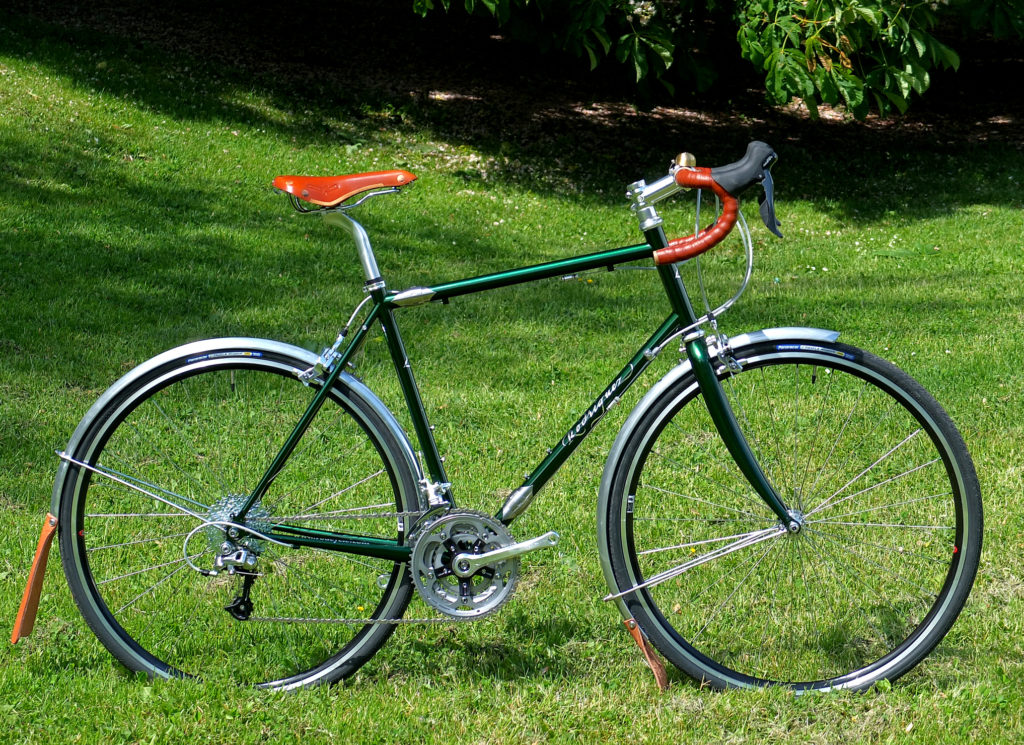
This post is part of an ongoing series profiling Rodriguez bikes that have been taken the extra mile by the customer. Today’s is a Rodriguez Rainier travel bike with impeccable aesthetics.
This Rainier has a gorgeous classic look
This customer had a clear aesthetic vision when they pulled the trigger on building this bike. Designed as a light touring road bike, it hits all the visual notes of a classic bike. Built with a few modern upgrades, it’s a beautiful expression of vintage bike style. As we go through the details, you can see where some compromises were made, but the overall look stayed true.
Silver parts were the order of the day
Let’s start with the drivetrain. The MicroShift derialleurs were an easy choice. They come in silver and work dependably with Shimano shifters to shift triple chainring reliably. This is also why the bike is 9 speed instead of 11. (see our post about drivetrains if you want to know more about gearing configurations) Silver parts go in and out of fashion in the bike industry and can be easy to find one year, hard the next. We’re glad companies like MicroShift help keep silver parts available for bikes like this.
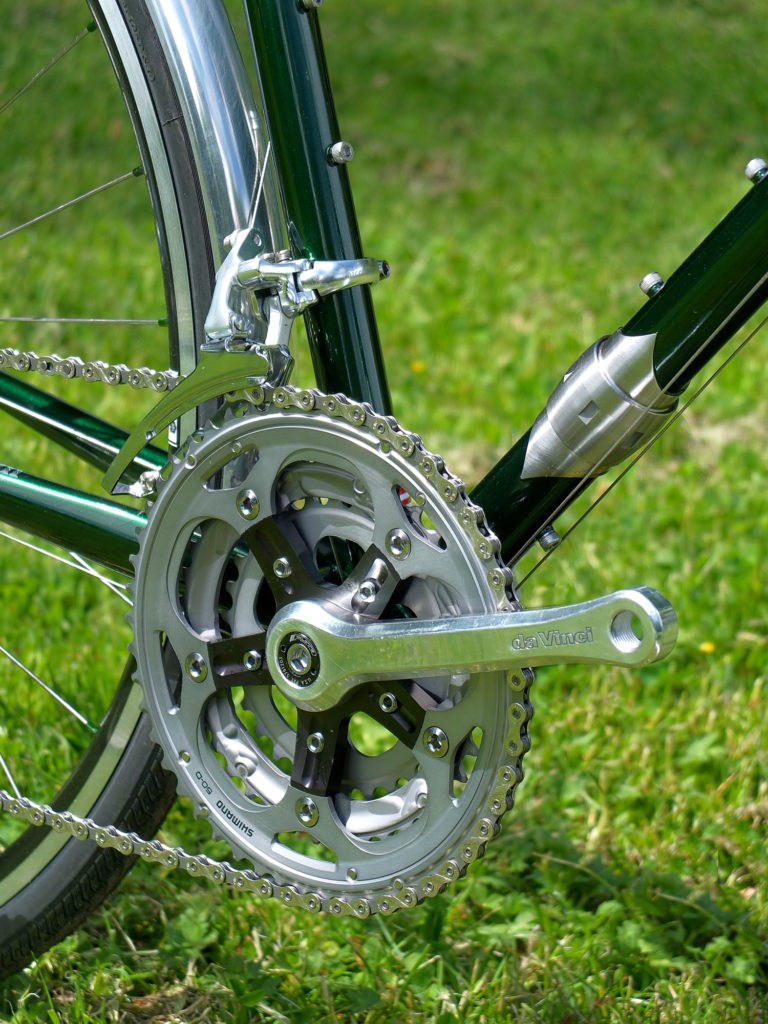
Hard to beat the look of a DaVinci crank arm
These DaVinci crank arms really round out this drivetrain configuration. When our customers want a triple crankset that’s both light and pleasing to the eye, DaVinci is our go to option. The square taper design and modular spider allow us to fine tune both Q-factor and ring spacing so that we can get everything just right for the customer and their needs.
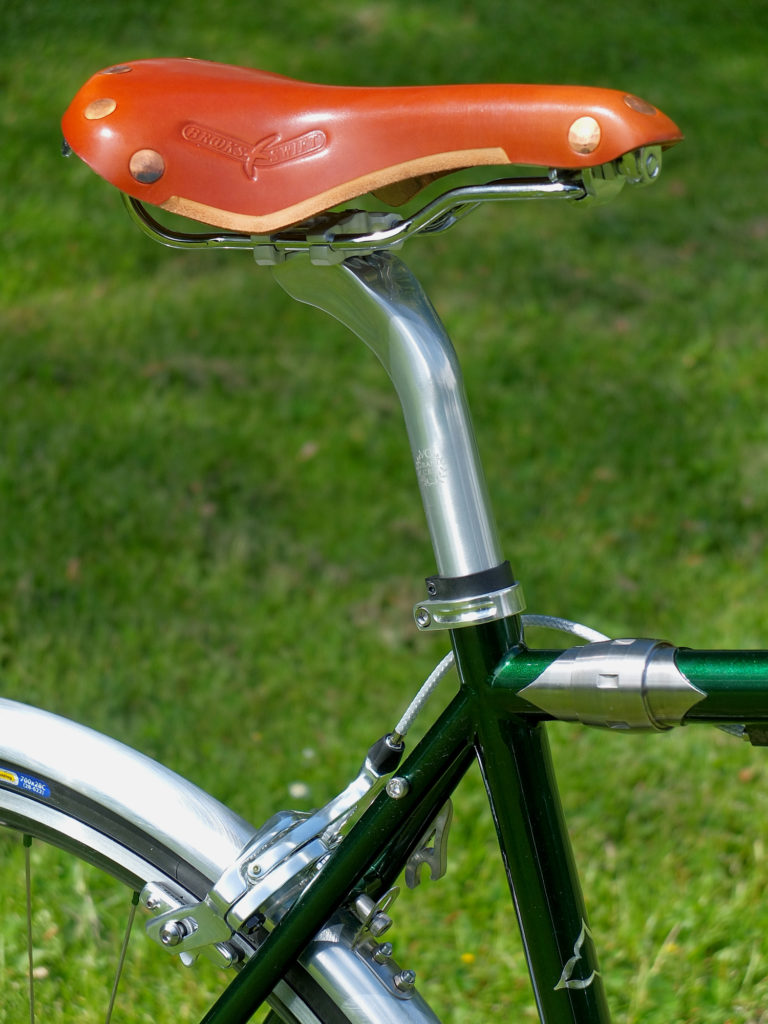
At the heart of this bike, and influencing it’s look, are the stainless steel frame couplers from S&S Machine. Not only are they essential to the travel aspect of the bike, they’re a component that meshes well visually with a classic style bike. The honey leather Brooks saddle atop a Velo Orange extra-setback seatpost are a look unto themselves. The post is essential for most riders that want a Brooks but also want a standard seat tube angle. This post gets the Brooks in exactly the right spot for most people. Velo Orange also supplied the retro style woven metallic cable housing used on the bike.
The brakes are silver Tektro R539 long reach calipers, which is our stock brake for the Rainier. Using stainless steel Sheldon Nuts to attach them gave us perfect mounting points for the Velo Orange smooth aluminum fenders. Velo Orange leather mudflaps accent the more prominent leather components of the bike while keeping the rider’s feet and friends dry.
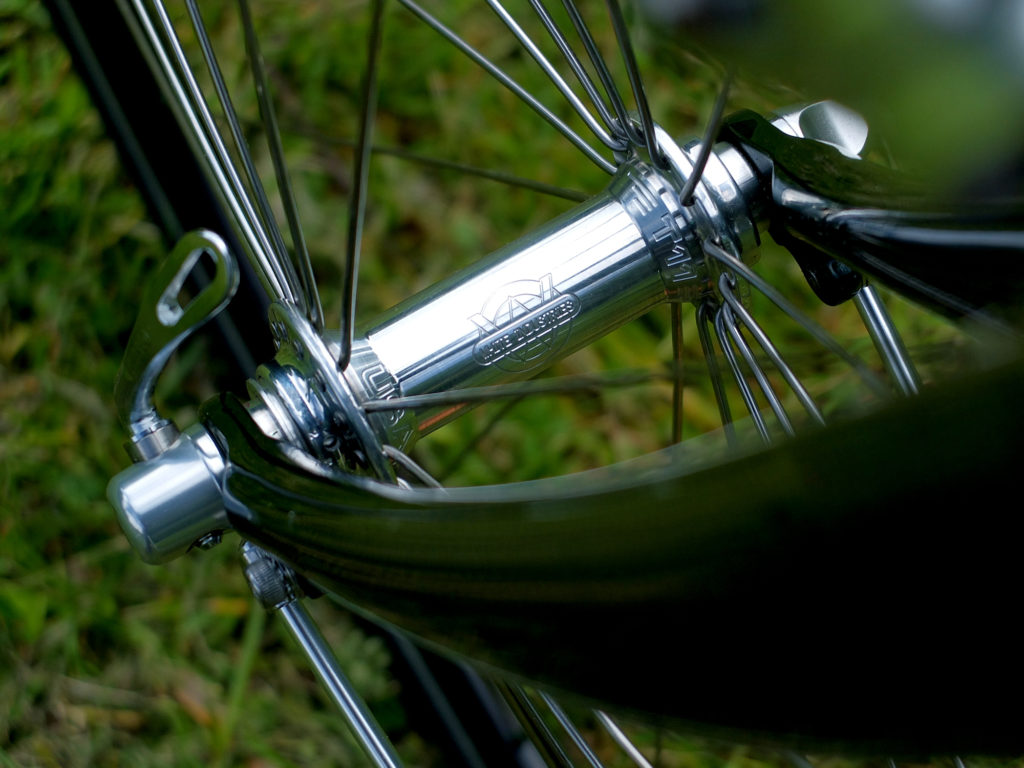
The owner chose to put a significant portion of their budget into a very lightweight set of wheels. High polish White Industries T11 road hubs laced to Stan’s Alpha 400 rims with DT Swiss butted spokes and 7075 alloy nipples. The lacing pattern is also weight saving, with a radial laced front wheel and a rear with a radial non-drive side and a two-cross drive side. The rigidity of the Stan’s rims made building with these lacing patterns a no-brainer and allowed us to build a wheelset just over 1400 grams. That weight savings made it worth the aesthetically incongruous use of a black rim instead of polished silver.
There’s also a nice weight savings with our Rainier carbon fork. While not ultra-light, our fork offers a lighter option to a steel fork with the resilience of an aluminum steer tube. Fastened with a set of the Velo Orange skewers that resemble the old Campagnolo skewers, it’s a visual package that works well.
The cockpit is a mix of classic and modern styling
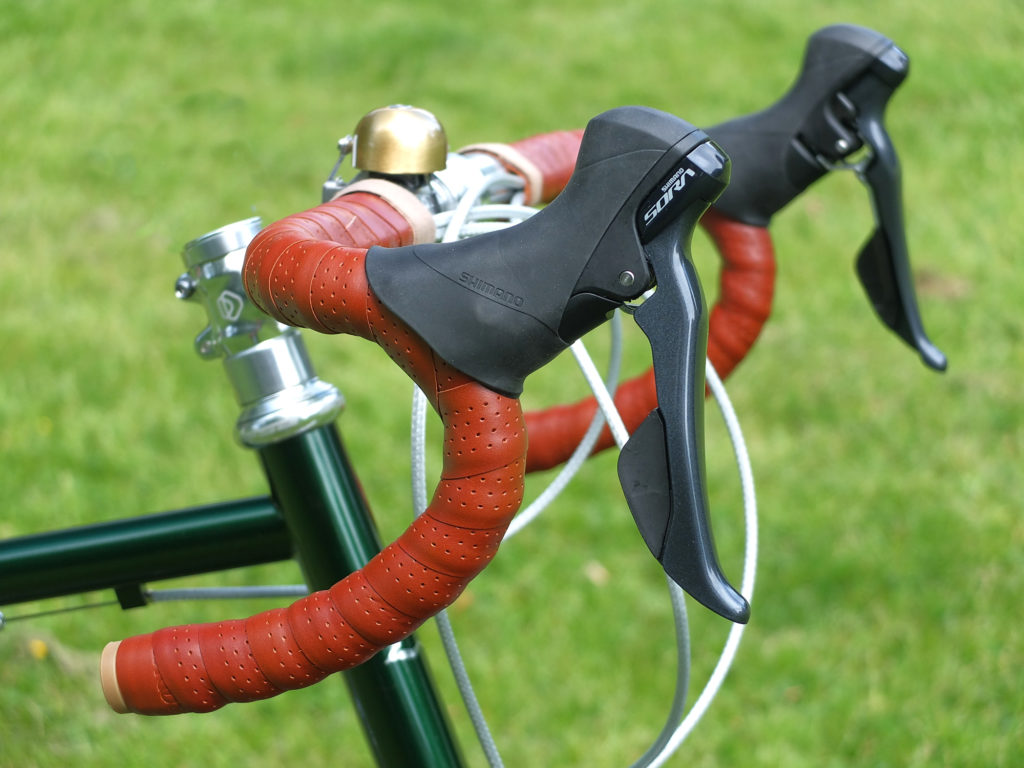
The handlebar setup really helps tie together the whole bike. The black Shimano Sora shifters, honey leather Brooks tape, and silver Soma HWY One bars work as color touchpoints to the rest of the bike. The Crane E-Ne brass bell is a lovely flash of gold on an otherwise silver outfitted bike. These shifters were chosen for their ability to shift a triple, but ended up working visually with the bike. They match nicely with the black rims that would otherwise look out of place.
This bike is a great lesson of how to get what you want while spending your budget where it matters the most. Helping our customers maximize their budget while still getting the bike they want is one of the skills we’re happiest to share. For the curious, here’s a complete parts list:
handlebars – Soma HWY One shallow drop alloy silver
bar tape – Brooks leather
seatpost – Velo Orange extra setback silver
seat collar – Dimension silver
saddle – Brooks Swift leather
fork – Rodriguez Rainier long reach carbon – custom painted
fenders – Velo Orange smooth aluminum
couplers – S&S Machine stainless
cables and housing – Velo Orange metallic braid
cable splitters – DaVinci
bell – Crane E-Ne brass
mud flaps – Velo Orange leather
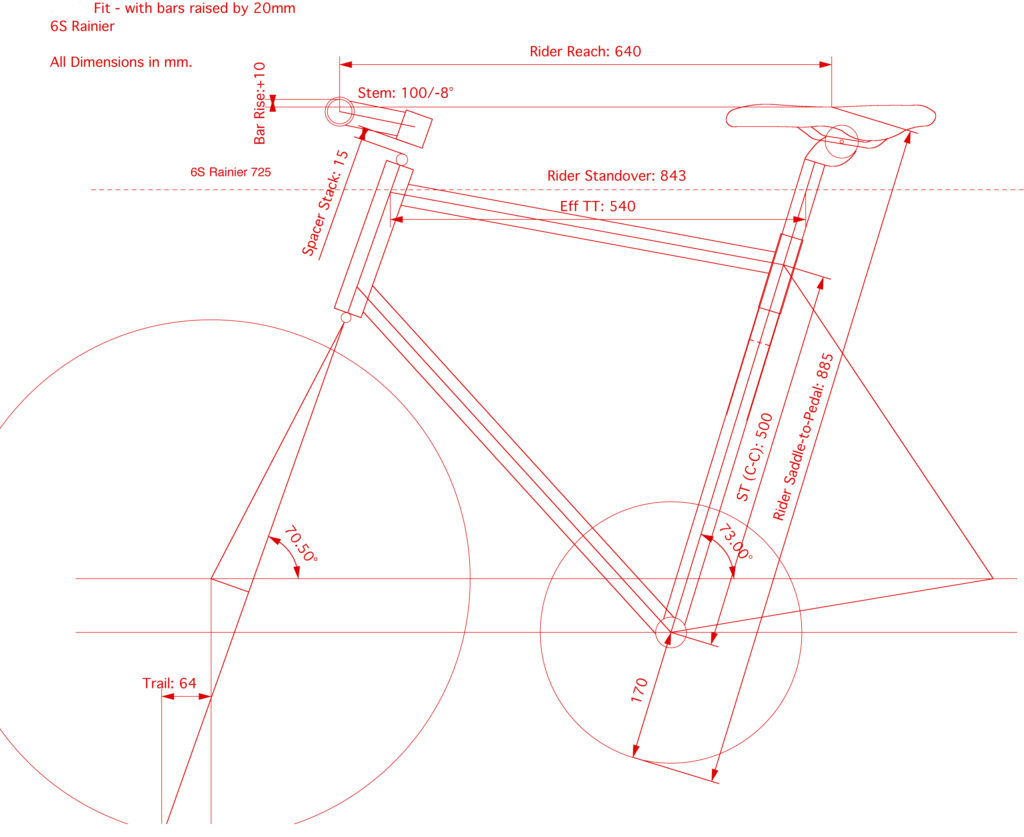
For the really curious, here’s the fit drawing:
We’d also like to thank Sockeye Cycle in Haines, Alaska for connecting us with this customer. If you’re looking to ride Alaska, they’re a great place to start.
In recent years, we’ve seen a rapid evolution in gearing options for bikes of all types. There are new options that have expanded choices for certain riders, and some options (arguably very useful options) have gotten pushed to the side. Rapid changes in “standards” are nothing new in the bike industry, and they tend to cause a lot of confusion for consumers and industry professionals alike. To clear things up, here’s an overview of your options as they stand going into 2020.
The Cassette
Over the past few decades, advances in cassette technology have mainly been aimed at squeezing in more cogs. In the 80s, even the highest-end drivetrains had just six cogs in the rear. 13-26 was considered standard. These days, high-end drivetrains use 11, 12, and even 13 cogs. This has created narrower cogs and chains as well as pushed road bikes to move to a wider rear triangle to accommodate more cogs and disc brakes. These thinner chains and cogs tend to wear out more quickly, however, so that’s been a bit of a trade-off. We’re starting to see some mountain bike drivetrains return to nine (and even seven) speed drivetrains to make them more robust.
As for the actual shifting performance, the woes of the 10 speed era have mainly been ironed out. Shifting is mostly excellent across the board. The new radical shift in cassette technology is range. Driven by mountain bike design, cassettes have ballooned in size. Just a few years ago, a cassette with a range from 11 teeth to 32 teeth was considered a large cassette. These days we’re seeing cassettes as wide as 9 teeth to 50 teeth. That’s a gear range of over 500%. The catch is that those are for single chainring drivetrains, also called 1X. All the shifting is in the cassette, so it needs to have a wide range. The only way to get that kind of range before was to use a triple chainring crankset. Why choose one over the other? Which is better for the rider? Well, that depends.
The cassette on the left has a huge range, but is meant for a single chainring up front. The one on the right has smaller steps between gears and is meant to be used with either two or three chainrings.
The rear derailleur has traditionally been used to fine tune your gear selection. Adding more cogs, like having eleven instead of nine, allows for smaller jumps between gears and therefore more control over the gear ratio. Large jumps are made by the double or triple chainring, then the rear was used to find a gear that was “just right”. The new selection of wide range cassettes have much bigger jumps between cog sizes. For some riders this can be frustrating when they can’t shift into a gear that feels perfect for the terrain they happen to be on at the moment. For other riders, this isn’t much of a big deal. They value the simplicity of using a single shifter and will either push harder or go slower when they can’t get the gearing perfect. There seem to be plenty of both types of riders so having multiple options is a good thing.
Chainrings
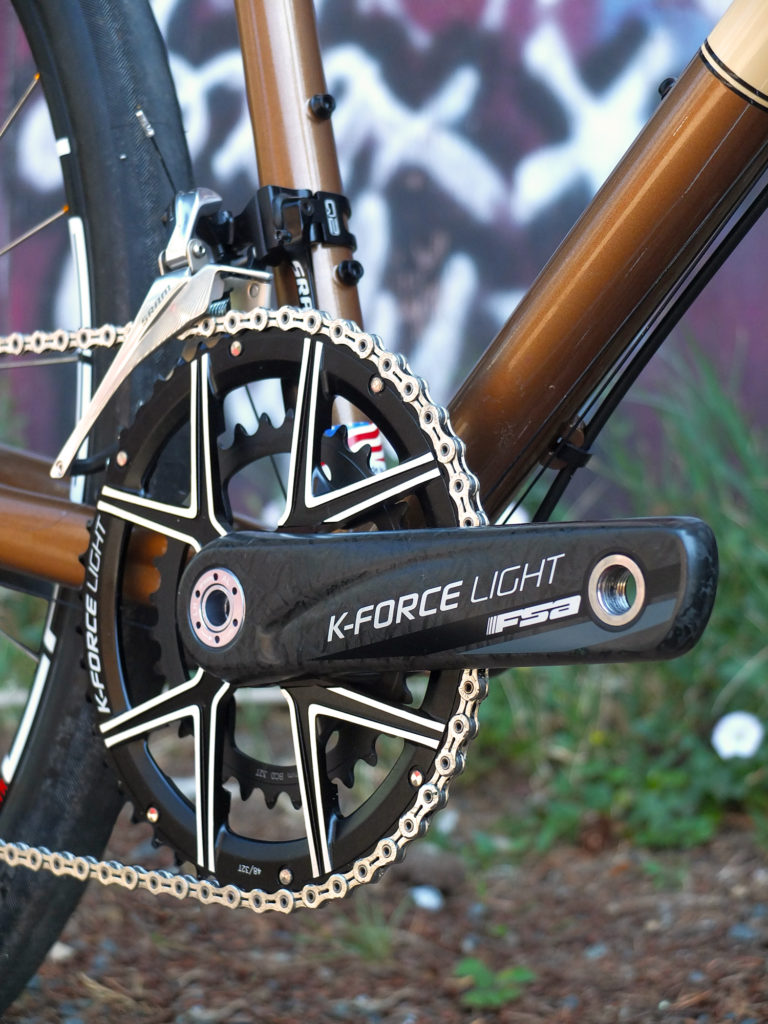
Chainring configuration has also seen a lot of change recently. We see three major shifts: an expansion in gearing options for double cranks, the emergence of “one-by” drivetrains, and the so-called death of the triple.
Double Chainring Drivetrains
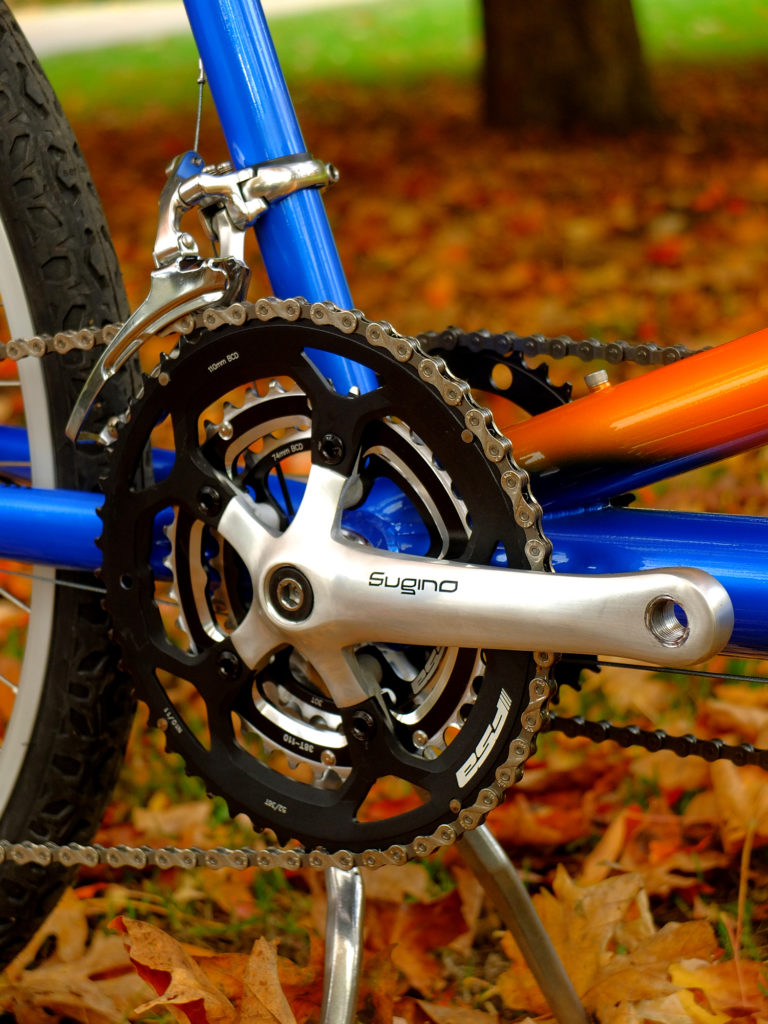
a modern 46/30 “sub-compact” double crankset
Not so long ago, there were essentially three choices in front gearing for double cranks. The traditional choice, suitable for racers and the manliest of manly men, was the 53/39-tooth combo. “Compact” gearing, 50/34-tooth, was initially rolled out as an alternative to triple cranksets and effectively became the industry standard with its more forgiving gear range. Finally, cyclocross ended up with its own chainring standard of 48/36-tooth.
Compact gearing worked well for a lot of riders, but never really lived up to its intended purpose of replacing triple cranks. Triples offered the option of getting ridiculously low gear ratios, but the compact double’s 34-tooth small ring (smaller rings mean lower gears on the front) wasn’t actually all that low a gear.
Enter the All-Road Bike. A growing number of cyclists today want a bike that can go back and forth between paved roads, forest service roads, gravel roads, and single track. That’s a lot to ask and also part of what’s fueling all of this drivetrain evolution and mutation. While the 46/30 has become semi-standard on bikes like this, combinations as low as 42/24 are available. Higher gears are sacrificed for all-terrain capability. Many see it as worth the trade off, but drivetrains may not be done evolving just yet. The recently released GRX series from Shimano will shift an 11-42 in the back while keeping a compact double 50/34 in the front. That’s a lot of range and it’s developments like this that lead people to pronounce “the triple is dead”
The 1X (one-by), or Single Chainring Drivetrain
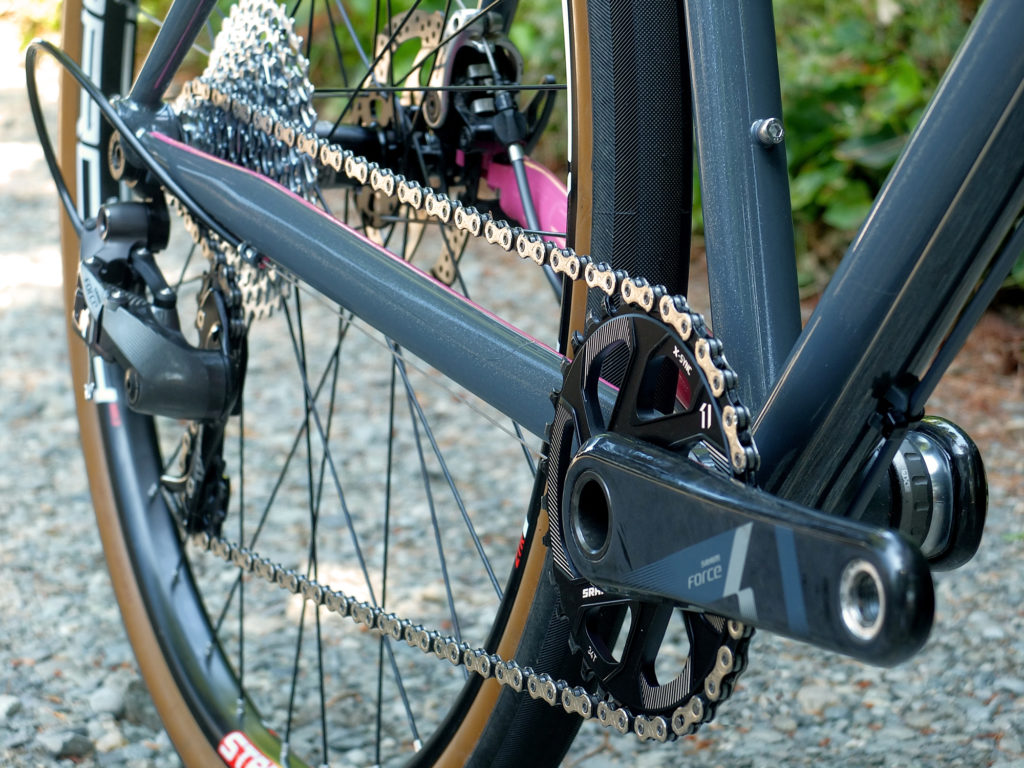
A modern “one-by” drivetrain
Like a lot of recent developments, the 1X drivetrain comes from the world of mountain biking. Riders who were pushing their mountain bikes to the limit over rough and varied terrain wanted to simplify things and take one variable for failure out of the equation altogether. The front derailleur was seen as the best part to go because when it did malfunction, it could stop a rider in their tracks. Thus, the 1X was born. It’s a little more complicated than just removing the derailleur. Chainrings were redesigned to retain the chain instead of letting it go for shifting. Rear derailleurs had clutch mechanisms added to keep the chain steady over bumpy terrain. This is also where the ultra-wide range cassettes began to develop. Mountain bikes need gearing that’s able to shift to a very low gear and do it quickly. Off-road terrain can become suddenly very steep and having just one control that moves the gear quickly and surely has been great for mountain bikers. They can make huge changes in gear ratio without the fear of dropping the chain off the chainring.
This drivetrain configuration has made the jump to all-road and gravel bikes now, for some of the same reasons. There’s something to be said for simplicity and dependability when your bike is covered in mud and you’re trying to make it up an 18% grade made of soft dirt. The trade off is the range, but cassettes that go from 10 to 50 teeth mitigate that aspect quite a bit. A 500% range is nothing to sneeze at. The disadvantages have to do with the cassette, as I discussed above. Big jumps between gears are not for everyone. Still, for some, the 1X fits their needs exactly. From a builder’s perspective, we just see it as one more tool in the toolbox for making someone a bike they love. It seems to be sticking around and we’ve met more than a few that don’t want to ride anything else.
Triple Chainring Drivetrains
Tales of the triple’s demise may be premature
Well, what about the triple? It’s death has been pronounced before, back in the 80’s. Back then, the triple (a crankset with three chainrings) fell out of favor on road bikes and was relegated to touring bikes and mountain bikes. “Compact” cranks with 50/34 tooth rings, the thinking went, provided plenty low gearing. It was only a few years before manufacturers again figured out that people still wanted to climb big hills on their road bikes without having to stand and mash a big gear, and the 34-tooth ring just wasn’t cutting it. Triples returned to full range of road groups. This is because no other configuration can match the gearing range of a triple drivetrain. That’s still currently true. A triple with a 53/39/28 chainring combination paired with an 11-36 cassette has a high gear of 122.3 inches and a low gear of 21.5 inches. That’s a range of 568%. That means the triple is still king in that category.
So why are so many people willing to declare the triple dead? A triple chainring drivetrain requires a bit more setup and adjustment, but just barely. A lot of people soured on triple shifting during the ten speed era I referenced above. During this time, manufacturers decided to make triple shifting “indexed” the way shifting in the rear was. One set movement of the shifter moved one gear with a click. Well, that didn’t go well at the time. The fledgling technology resulted in a lot of mis-shifts and dropped chains. It really wasn’t fun for anyone. By the time the problems got ironed out, the compact double appeared and people steered away from the triple altogether. And yet, the triple still refuses to go away. Certain riders still insist on one because they love the combination of range, flexibility, and adjustability. Up until recently, it was still the only way to get truly low gears on a road bike. That aspect may have changed, but we’re not ready to count the triple out just yet. A lot of our customers ask for it and we’re going to continue to provide it as best we can for those customers. In the end, we believe it’s worth keeping the option available. The mountainous climbs and long descents of the Pacific Northwest might have something to do with that choice.
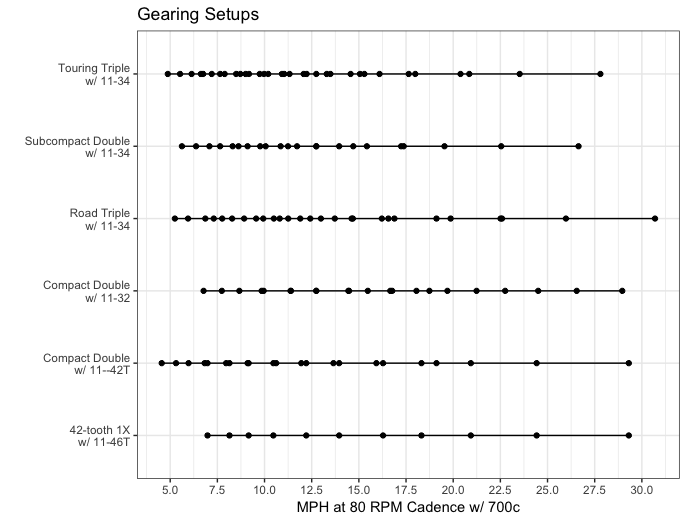
We’ve put together a chart to help visualize what the differences between these options are in a linear perspective. Here, you can see not just the range, but what the jumps between gears look like as well. (Thanks to Logan for the chart and his input on this post)
I hope this answers any questions you might have had regarding what’s going on with bicycle drivetrains these days. Currently, we have more options than ever before and that’s not a bad thing. It helps us hone in on what will be best for each individual customer, and as a custom shop that’s exactly what we want. We’re not going to say goodbye to the triple anytime soon, but that doesn’t mean we won’t say a warm hello to the new developments out there.
What really makes a bike custom? Sometimes it’s the geometry. Sometimes it’s a special paint job. Sometimes, though, it’s literally everything. Some customers come to us with a good idea of what components they want, how they want the bike to handle under specific conditions, and what overall aesthetic they’re aiming for. These kind of customers want to make sure each component of the bike it optimized to fit their vision of the bike, and helping them fine tune their vision is one of the most satisfying parts of our job. When you help someone craft a bike that’s just right for their needs it’s a great feeling.
This blog post will be the first of many detailing the entirety of a bike like this. Not just a parts list, it will explain the logic behind each decision and hopefully serve as an inspiration for those who want to build just such a bike for themselves.
Gary’s Bandito
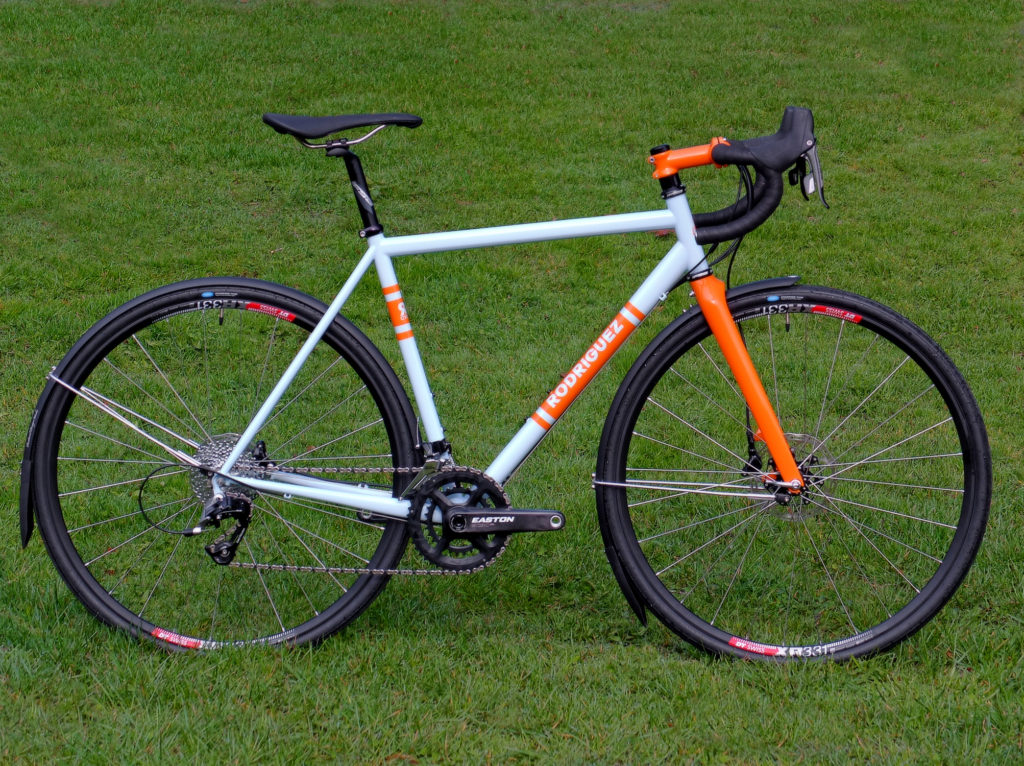
Today we’ll be taking a close look at Gary’s Bandito. Gary is a randonneur and he built this bike in large part to ride the 2019 Paris-Brest-Paris ride. For the uninitiated, that’s a 1200km (750 mile) ride that must be completed in under 90 hours. It’s the kind of ride that requires a trained athlete and a reliable bike. Gary also wanted a bike that was as gorgeous as it was functional, so it got a beautiful paint job as well. Let’s take a look at some of the details.
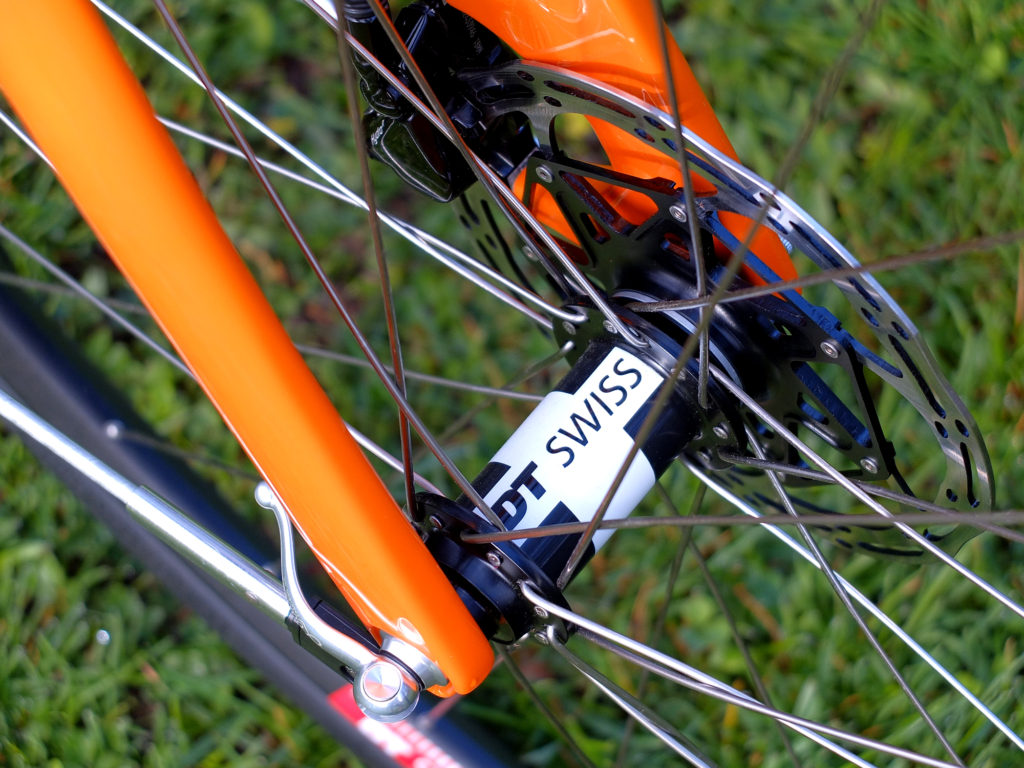
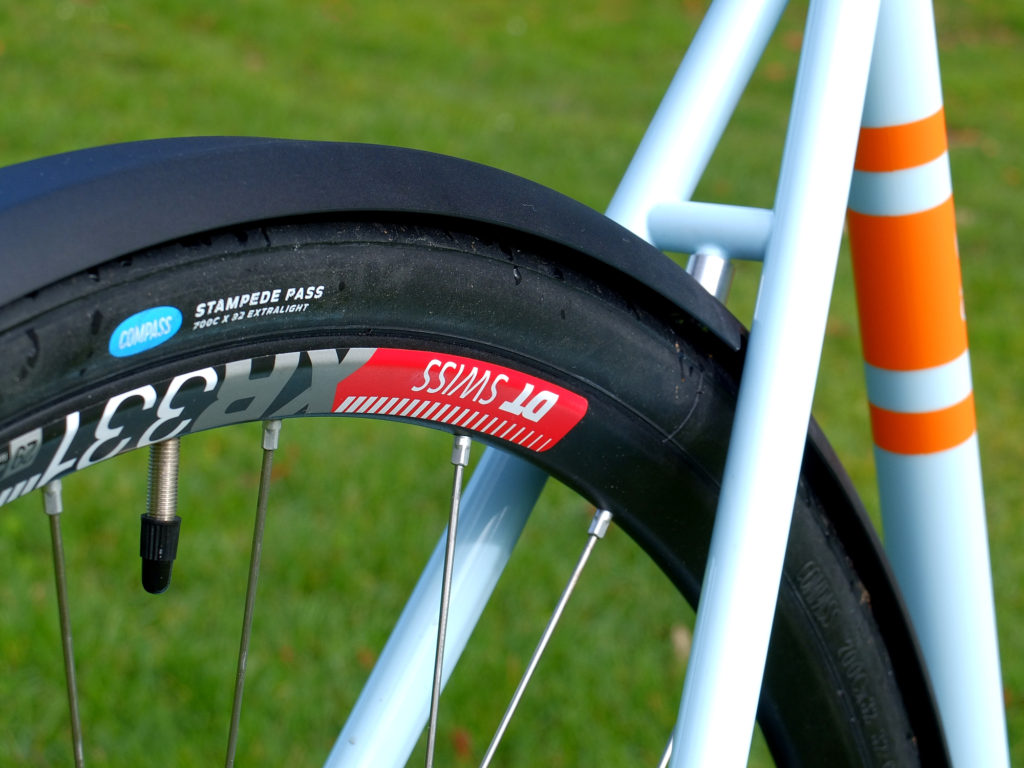
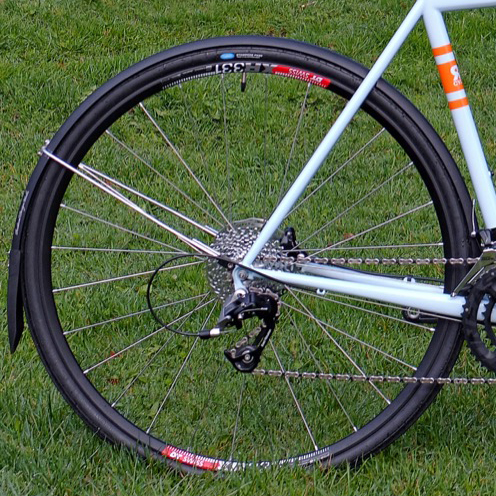
Let’s start with the wheels. Gary chose DT Swiss 180 hubs, so named because the rear hub weighs only 180 grams. These hubs come standard with high quality ceramic bearings which reduce both weight and rolling resistance. The rear hub is equipped with the DT Swiss patented Star Ratchet system freehub, which provides excellent engagement while being incredibly reliable and easy to service. These hubs may be the best combination of lightweight, reliability, and performace available. Perfect for a grueling long distance ride.
The rims are also DT Swiss. They’re the 700c XR 331 model, which is a well balanced disc-only rim that offers stiffness and strength in a lightweight package at only 380 grams per rim. The spokes are DT Swiss Competition double butted spokes with the DT Squorx nipples. Rounding out the package are a set of Compass (now Rene Herse) Stampede Pass Extralight tires. These are some of the lightest and fastest rolling clincher tires on the market and provide a famously supple ride. Overall, these wheels are very light without sacrificing durability or ride quality. They’re as light or lighter than most wheelsets with carbon rims and less expensinve. They’re also easily serviceable at any competent bike shop. They’re as close to “worry free” as a high performance wheelset gets.
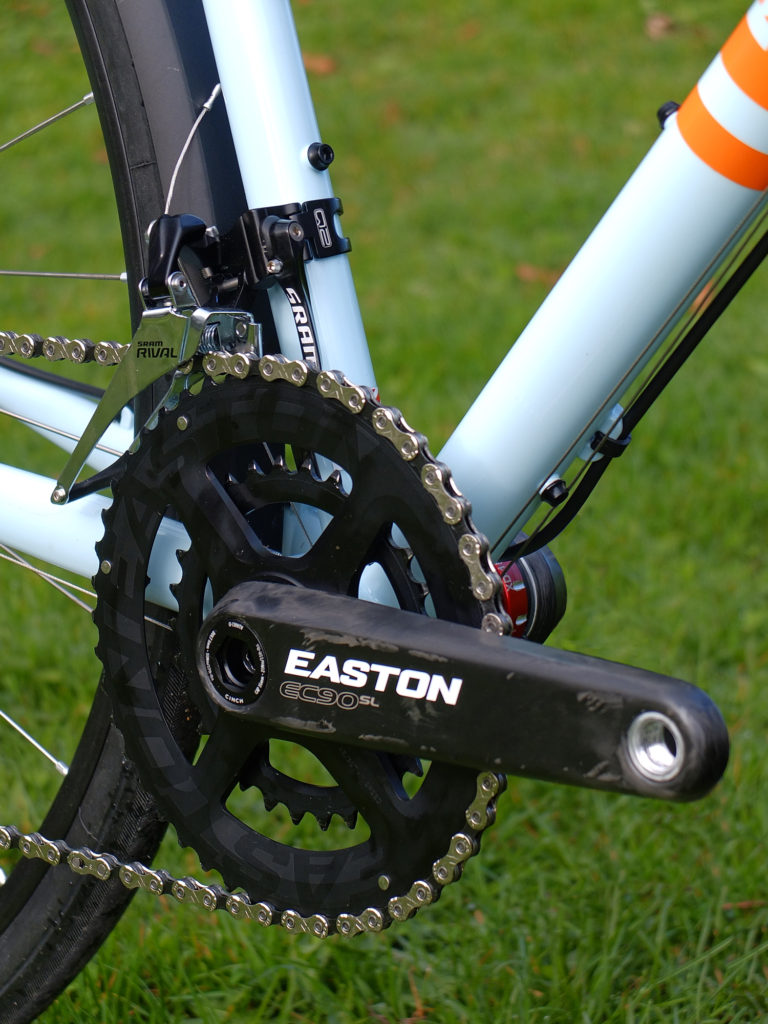
The crankset and bottom bracket on this bike follow a similar theme, combining lightness, durability, and function. The Easton EC90 SL cranks are some of the lightest and stiffest cranks on the market. Gary went with a chainring combo of 46/30, which is a popular combination for randonneurs. The real prize, however, is the bottom bracket. The Enduro TorqTite with XD-15 bearings is one of the toughest, lightest bottom brackets on the market. Ultra smooth ceramic cartridge bearings that are nearly indestructible, it holds up to heavy use and abuse.
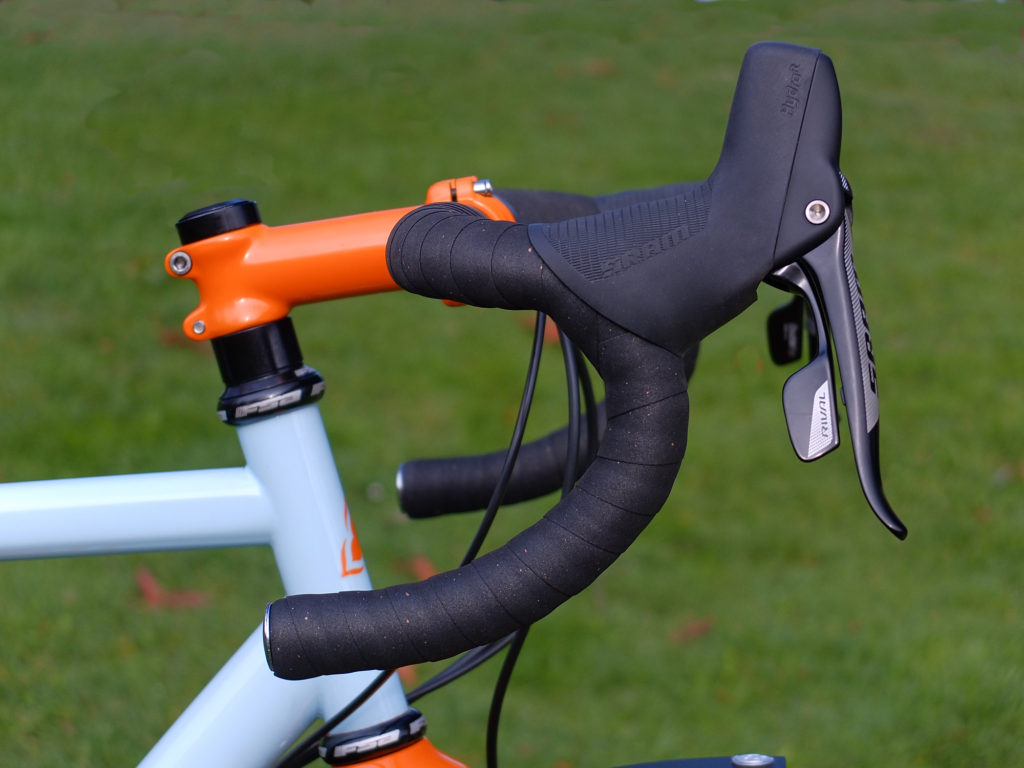
Believe it or not, this bike did not have an unlimited budget. Gary chose to save a little bit by going with Sram Rival instead of Sram Red shifters, derailleurs, and hydraulic brakes. This saved a bit of expense with only a minor weight penalty. That same thinking led to the choice of Shimano PRO alloy handlebars and a plain alloy stem. Some of that weight was mitigated, however, by using a traditional 1-1/8″ headtube and straight steertube Whisky No7 carbon fork. This setup saves a bit of weight over a tapered headtube and matching fork. The FSA Orbit X headset weighs about the same as a Chris king but at half the price so that was an easy choice for Gary.
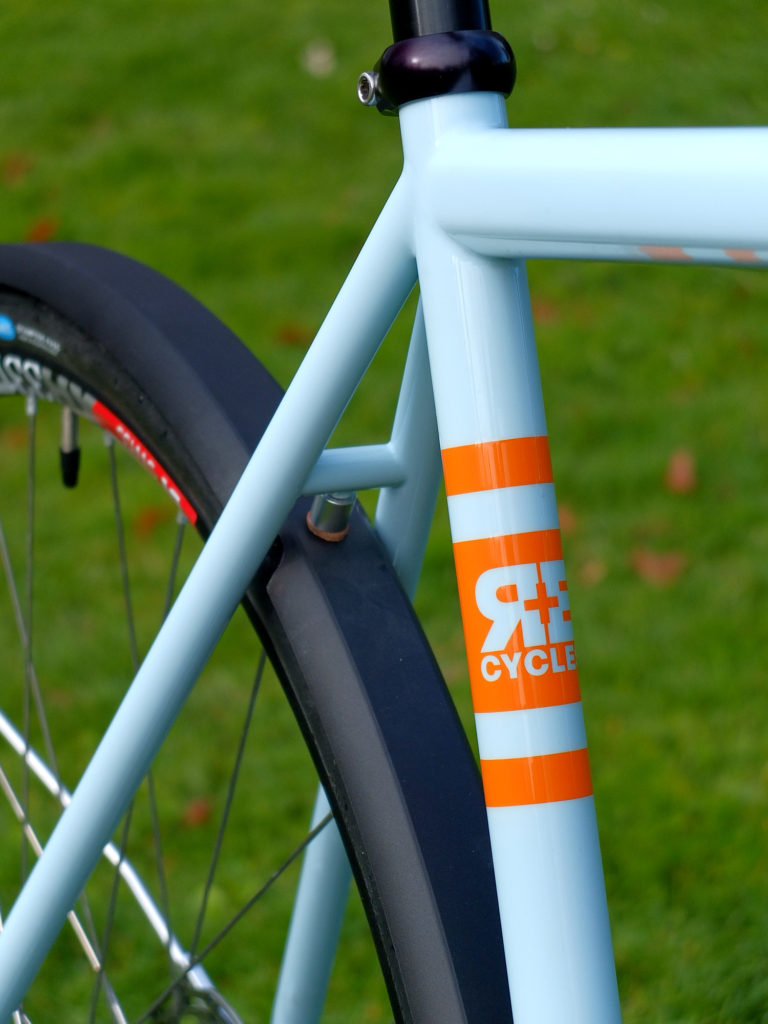
All of this is to complement the Rodriguez Bandito frame we built for Gary. Made of our ultralight steel tubing blend and custom fit to Gary’s measurements, it’s the perfect frame for a rider that spends long hours in the saddle. The supple ride quality of a steel frame is legendary for a reason and is still the go to choice for many serious riders. We’ve been building custom steel frames since 1973 and we’ll be happy to keep doing it well into the future.
Gary’s bike is a good example of what goes into a fully custom bike. Every piece of the puzzle was considered as to how it fit with Gary’s overall vision of the bike he wanted. When Gary wasn’t sure about a component, he was able to draw on our experience and find the right choice from his many options. This kind of project can be deeply satisfying for everyone involved and in the end, we produced the bike Gary envisioned. To us that’s a job well done. In future blog posts, we’ll look at other dream bikes and see what decisions brought them to fruition. For a full gallery of Gary’s bike, go here. You can see a full list of Gary’s parts below:
shift/brake levers – Sram Rival 22 hydraulic
derailleurs – Sram Rival 22
brakes – Sram Rival hydraulic
rotors – Sram Centerline CL 160mm front 140mm rear
It’s that time of year again. The rainy season is almost here. For those of us in the Pacific Northwest, fenders are a fact of life if you want to ride all year long. If you don’t ride in the rain, you pretty much don’t get to ride between November and June. While some young riders resist fenders on aesthetic grounds, they eventually come around during a particularly miserable winter (looking at you, Alder!).
In this post, we are going to take a look at the ins and outs of fenders so you can make some informed decisions about what to put on your bike, why, and how. What’s the real-world difference between plastic and metal fenders? How much coverage do you need?
Plastic vs Metal
While the vast majority of bicycle fenders are made of polycarbonate plastic, metal fenders have seen a resurgence in recent years. There are practical reasons to argue for both materials, but many hold the opinion that metal fenders have the edge both functionally and aesthetically. Let’s look at the pros and cons of each.
A Planet Bike Cascadia plastic fender
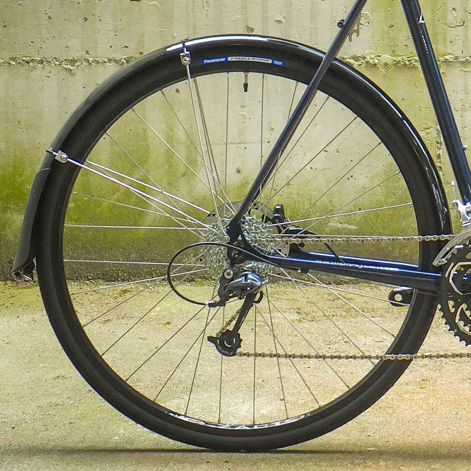
Plastic fenders have a lot going for them. They’re easier to install, for one. Most come with all the hardware you could need and are designed to go on quickly and easily. They can flex during installation to match the wheel diameter without much hassle. Plastic fenders are also very durable and withstand certain types of damage quite well. So what’s the downside?
Plastic fenders flex a lot more than metal fenders, which can lead to more noise. The struts usually included with plastic fenders are also not as stiff as the style of strut many metal fenders use. This can result in a lot of wiggling and rubbing when riding over rough terrain. Hardware is riveted to the plastic so modifications can be difficult if you don’t have the proper tools. Plastic fenders also lose their shine over time and can become dull looking after a few seasons of use. This matters to some people, but not everyone.
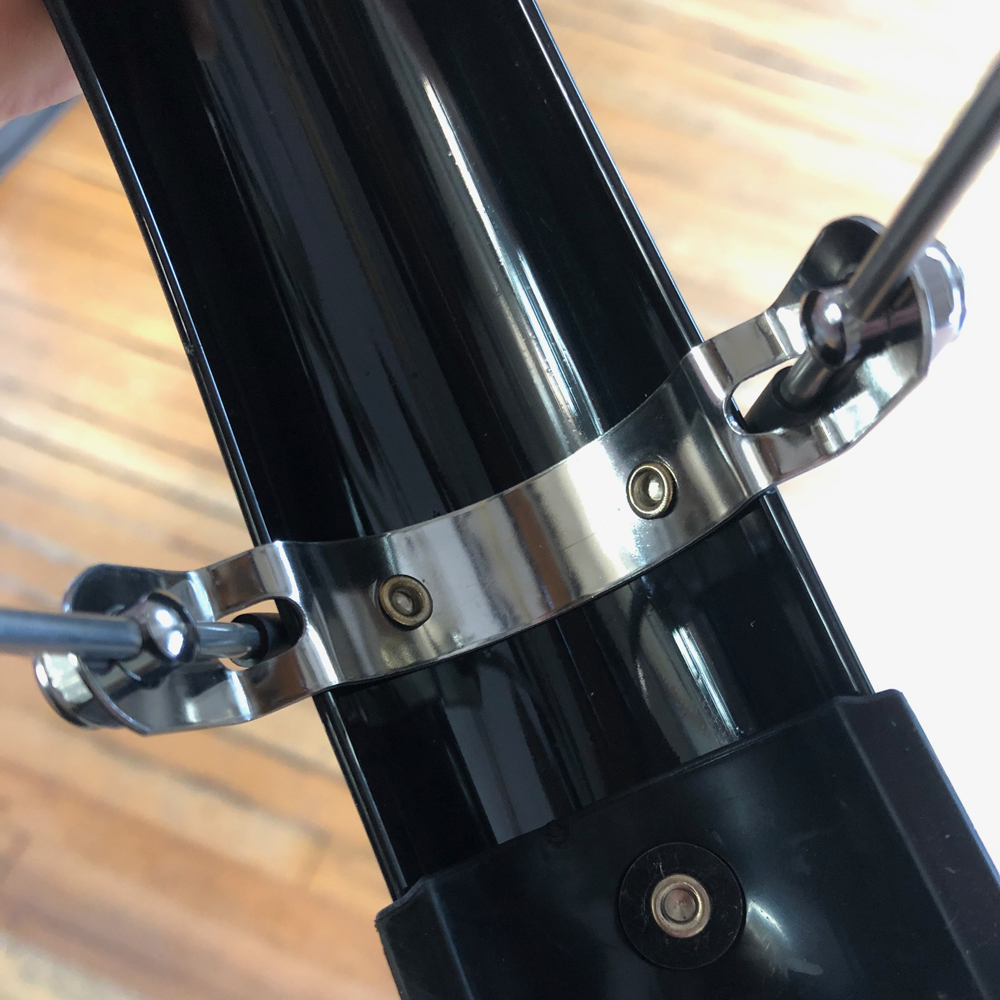
This metal strap can be problematic
One reason the plastic fenders move more easily is the way the struts are attached. A metal strap is riveted to the underside of the fender and the strut ends are then bolted to each side. This is much more flexible than the struts on metal fenders, which go around the outside in a continuous loop. The strap can also interfere with water flowing correctly out of the fender, causing drips. Minor stuff, but something to be aware of.
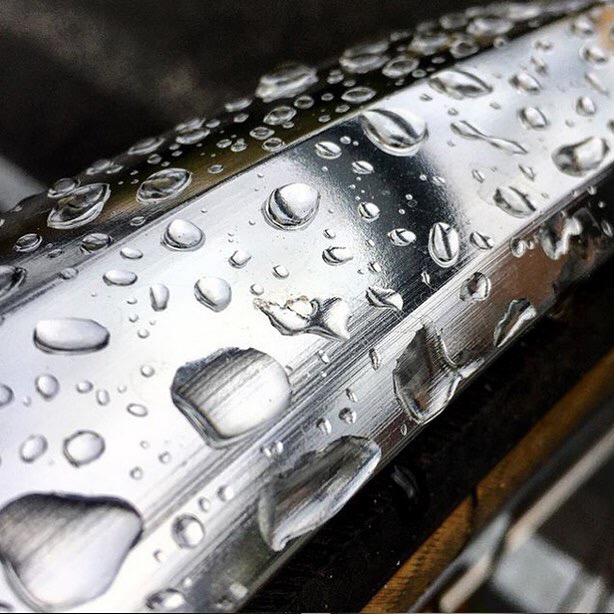
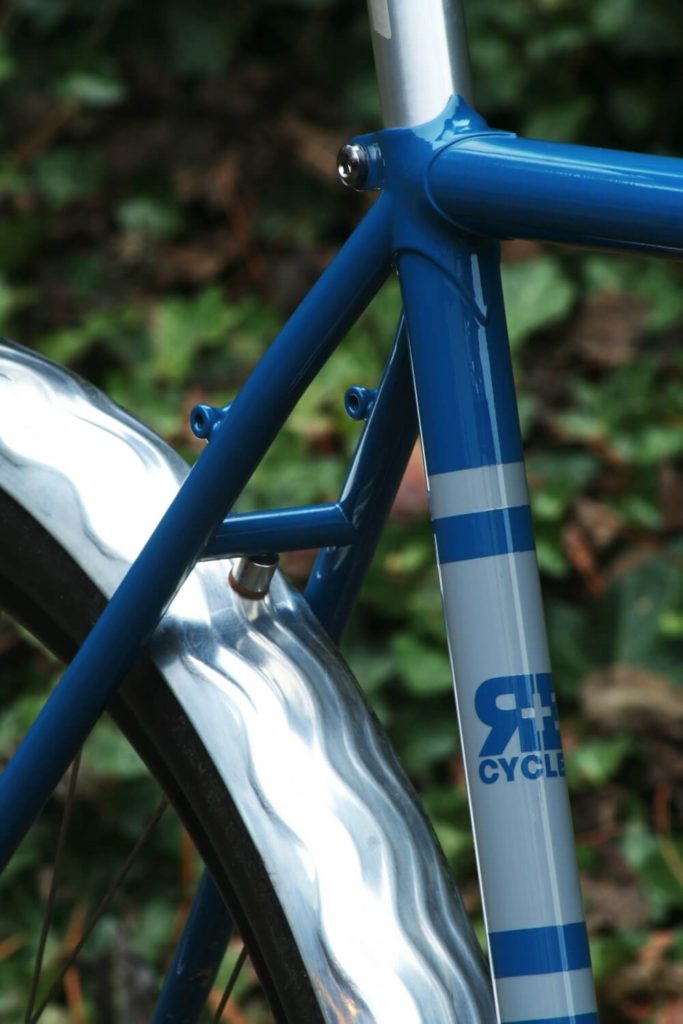
A Velo Orange “wavy” aluminum fender
Metal fenders do have a lot going for them. They’re much more rigid than plastic and make less noise overall. The metal only ever needs a wipe down or maybe a polish to look as good as new. They’re very customizable to really fit them to your bike. They can also support a properly installed light system with a little modification.
A Portland Design Works aluminum fender
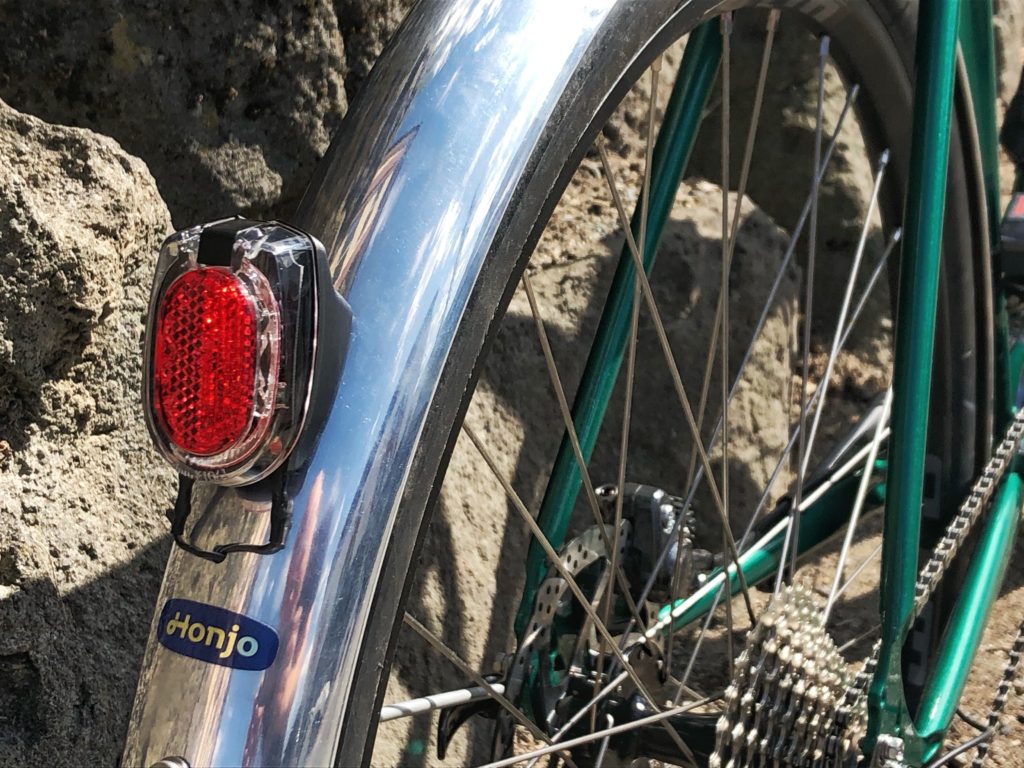
The downside to metal fenders really lies entirely in the installation. It’s time consuming and laborious, especially if you lack either tools or experience, and can be expensive if you have a shop do it for you. Some of this depends on the brand of fender you choose. Honjo makes what most consider the best aluminum fenders. They’re light, stiff, and beautiful. They are also very time consuming to install because each piece of hardware requires drilling a hole into the fender to attach it. Some brands, like Velo Orange, come pre-drilled to make this step a bit easier.
Since metal fenders don’t generally flex, they may not match the radius of your tire. Some brands, like Honjo and Velo Orange, can be “re-radiused” to match your tire. (Velo Orange has a good blog post about that here) Some, like Portland Design Works metal fenders, cannot change the radius very easily. If you force a metal fender into a flexed position during installation, it will eventually crack from the stress. Metal fenders are also more susceptible to impact damage than plastic, especially the ultra-light versions like Honjo.
A Cascadia ALX aluminum fender
Planet Bike has a model of aluminum fender called the Cascadia ALX that tries to bridge the gap between plastic and metal. The hardware is pre-installed like a plastic fender and the shape of the aluminum allows more leeway to flex the fender to the proper radius. Not as much as plastic, but more than traditional aluminum. The fender moves more than traditional metal fenders during rough riding, but less than a plastic fender. It does have the underside mounted metal strap, which is a drawback, but a fixable one. If you’re looking for a metal fender but don’t feel comfortable with complicated installation, the ALX might be a good choice for you.
A Honjo lightweight aluminum fender with dynamo powered light attached
Measurements
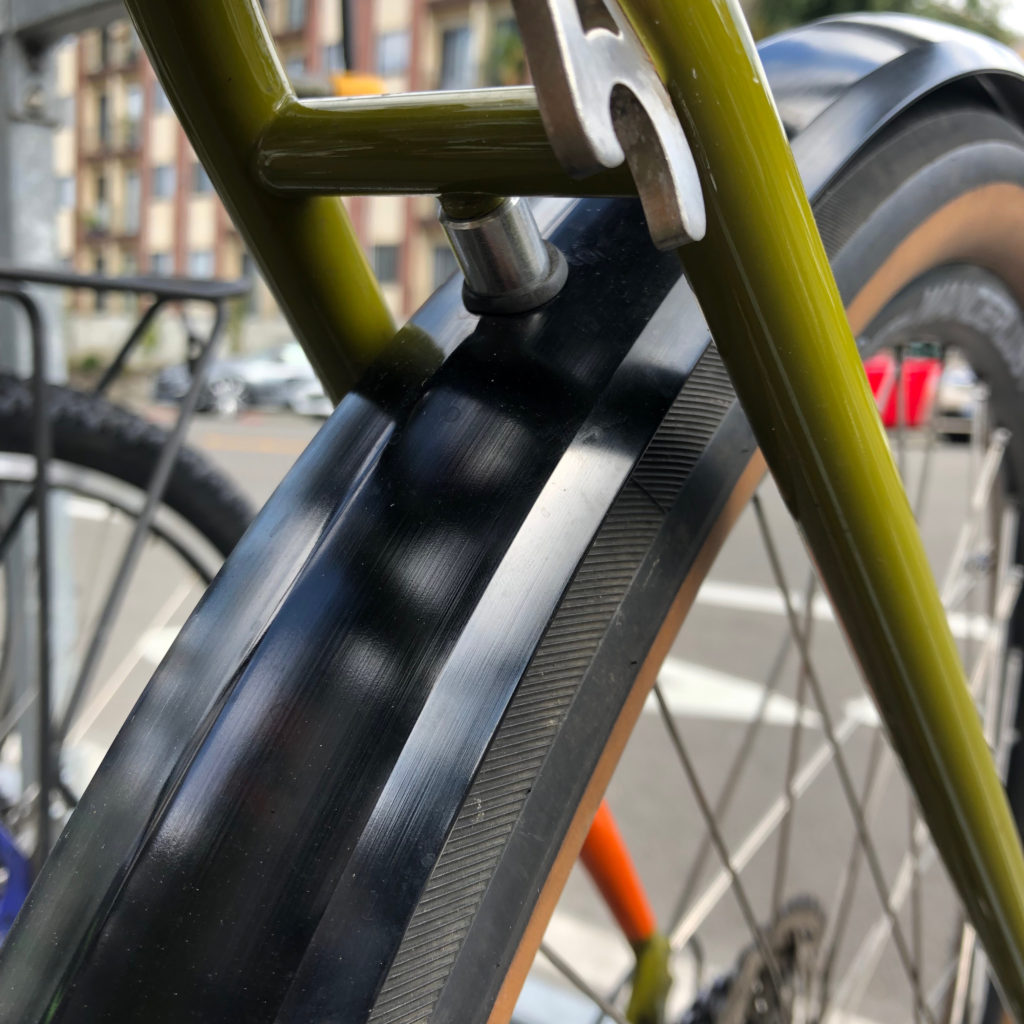
Fenders come in lots of different sizes to fit your needs. Ideally, your fender should be 10mm wider than your tire and sit at least 20mm above your tire. Any less and debris can get caught between your fender and tire. If you can’t get those clearances on your bike, you may need to run a smaller tire to get the most out of your fenders.
The fender radius should be even with the tire all the way around. While aesthetically pleasing, this also eliminates tight spots that could catch debris or open areas where water can spray out.
All of this assumes you have room in your frame for fenders as well as proper mounting points on the frame. If you’re having trouble fitting fenders to your frame, seek advice from your local mechanic. There are lots of solutions and adapters that can help.
Mudflaps
Mike’s mudflaps are on point
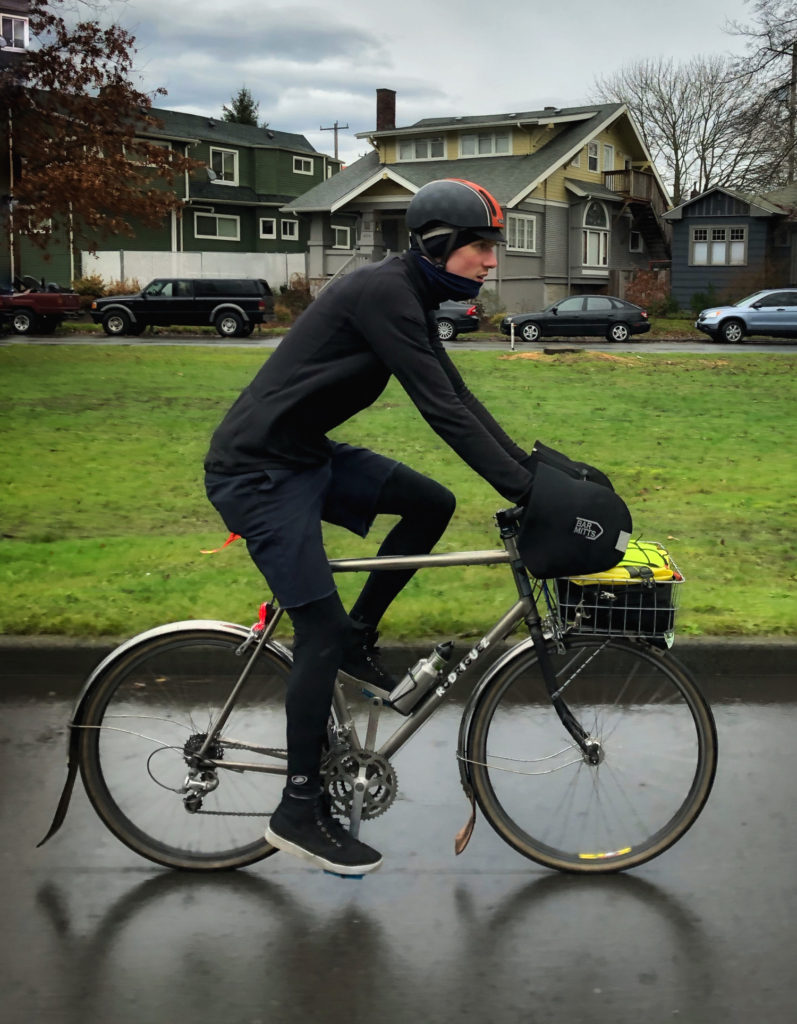
The humble mudflap might seem like an afterthought, but they’re essential equipment. There’s almost no stock mudflap that does an adequate job. A good mudflap in the front keeps your feet from getting splashed with road muck as well as keeping your frame a bit cleaner. A proper rear mudflap is essential for group rides. Nobody likes water spraying up into their face and all over their bike and clothing, and they won’t like you if you’re the cause of it. Mudflaps should be made out of a semi-flexible material like rubber, plastic, or thick leather and hang very close to the ground. Too flexible and it won’t stay where you need it. Too stiff and you might catch it on something and break it. Tightly bolting the flap to the inside of the fender will force the flap to conform to the shape of the fender, adding some stiffness. Also, a bit of extra width is useful in the front to better handle splashes from standing water.
Hopefully all of this is helpful in your quest for dry feet and year-round cycling success. As the old saying goes, there’s no such thing as poor weather, only poor preparation.
For some general cost info, here’s what some of these options would cost in our service shop:
Planet Bike Cascadia plastic fenders – $55 (installation – $35-45)
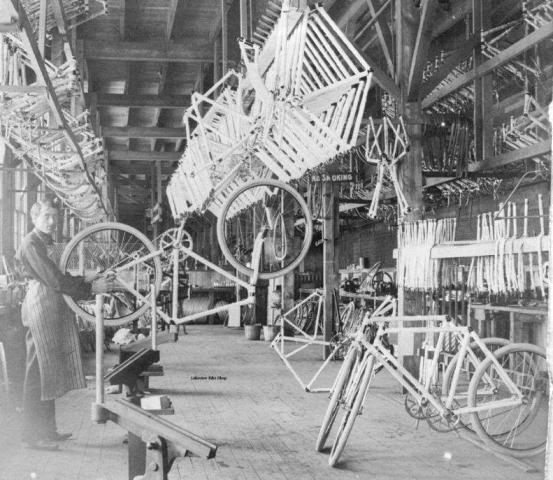
Being a small builder has it’s challenges. Our goal has always been building a bike that fits well and meets all the customer’s performance needs. Sounds simple enough, but a lot goes into it. We couldn’t do it without a manufacturing system that’s both efficient and versatile. It’s the core reason why we can offer a bike built just for each customer that’s exactly what they’re looking for. Today I’m talking about some of the steps we’ve taken to make that goal possible in today’s bicycle world.
In 2005, we radically redesigned our manufacturing process. We went from a traditional batch method of bike building to a true “one at a time” custom building process. We did it in such a way that both saved time and made our system almost infinitely flexible. How is that working out almost 15 years later? Turns out it’s more relevant than ever.
Batch building is a traditional method in the bike industry
The traditional method for building bikes involved making batches of frames that were all the same. This is still done on a large scale by the major (and some less major) manufacturers. A set of sizes are designed and a number of each size is made depending on how many the maker thinks they can sell. This is great if you ride a medium size and your body is of medium proportions. There’s always a bike for you in the world. This is less great if you need a size that’s unusual or a size that’s in between the common sizes. It’s also a problem if you want special features not included on the production model, or specific performance characteristics from the frame. That’s where builders like R+E come in handy.
In the beginning (the mid 70’s) we would also build batches of bikes in order to save time in the frame shop. Bikes were built using lugs, which limited the frame design somewhat so there wasn’t as much variance between frames like you see in modern bikes. A road bike was a road bike. A touring bike was also pretty much a road bike, just slightly different. Mountain bikes hadn’t happened yet. Batches made a lot of sense under these conditions. This didn’t change much until the late 1980’s.
The 80’s brought us a plethora of new technologies that reshaped bike design. Tig welding freed us from the strict design needs of lugs. New tubing choices in steel, titanium, and very early carbon fiber (then called graphite) became more available. The radical design needs of mountain bikes started to redefine what a bike could (or should) look like. Bikes started to become much more differentiated as we moved into the 90’s. Road bikes, touring bikes, and mountain bikes started to look very different from one another.
As a custom builder, we also started varying our designs. Rodriguez developed the Stellar, one of the first bikes designed specifically for women. It wasn’t just a bike with a lowered top tube, but one that took into account women’s smaller stature and fit needs. Tig welding and new mitering tools allowed us to build bikes with new geometries that didn’t have to make as many compromises for smaller riders. However, we still did a limited number of production sizes and built bikes in batches whenever possible. Our milling machine had to be set up from fresh for each new process so doing multiples made sense
By the early 2000’s the bikes we were building had become more individually specialized than ever before. Each model had a very different set of requirements and we had expanded our sizing range to better accommodate our customers. Batching became more difficult and less valuable. Our framebuilders were losing time waiting for machines to be freed up and bikes were taking longer to finish. We knew we had to change our process.
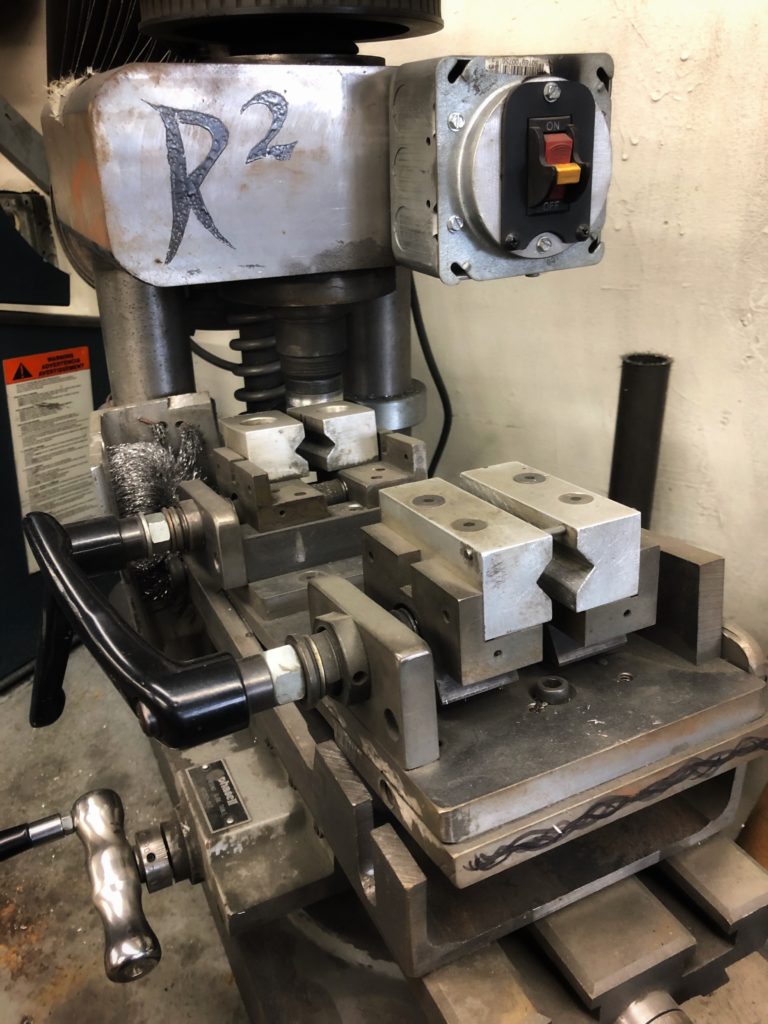
This machine’s only job is slotting chainstays and seatstays for inserting dropouts
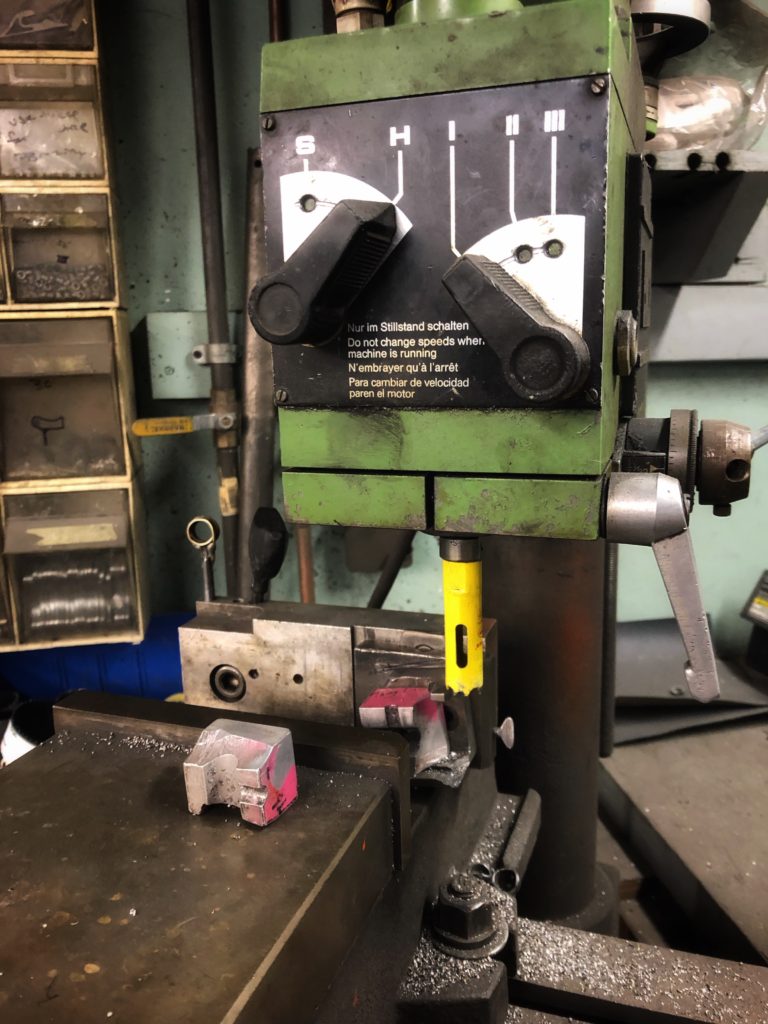
Starting in 2004, we made several significant changes to our production model. Instead of a couple of versatile machines doing everything, we switched to several smaller machines that did just one thing really well. Once set up, these machines virtually eliminated idle time due to machine setups and changeovers. Our framebuilders could finish a frame much more quickly without sacrificing quality. Our new tube mitering machine could miter tubes of different diameters and cut different angles much more easily as well. Our builders were suddenly able to build a standard frame from scratch in less than a day. This freed them up to build much more elaborate and complicated designs without the entire production process coming to a halt.
This machine miters bridges for the rear triangle. It’s been doing it perfectly since 2005.
In 2019 we can see that all of these changes weren’t just beneficial, but vital to the direction bike design has taken. There are more differentiated styles of bike now than ever before, each with their own idiosyncrasies. Gravel bikes, road bikes, touring bikes, city bikes, randonneuring bikes, and mountain bikes all have different manufacturing requirements. If we need new tooling or equipment for a new feature or component, we build or buy what we need and it gets incorporated into our tool set. Being a small builder requires a high level of manufacturing versatility and we’re lucky to have started working that way as soon as we did. It’s allowed us to evolve to meet the needs of customers more easily without having to resort to lengthy wait times or compromises in quality. That’s exactly the kind of builder we want to be.
This post is an update to an article Dan wrote in 2006 about or then new process.
This article details our journey towards the perfect bike fit.
This one talks about bicycle sizing and how yours is determined.